What Is a Security Operations Centre (SOC)?
- Posted by 3.0 University
- Categories Cyber Security
- Date May 16, 2026
- Comments 0 comment
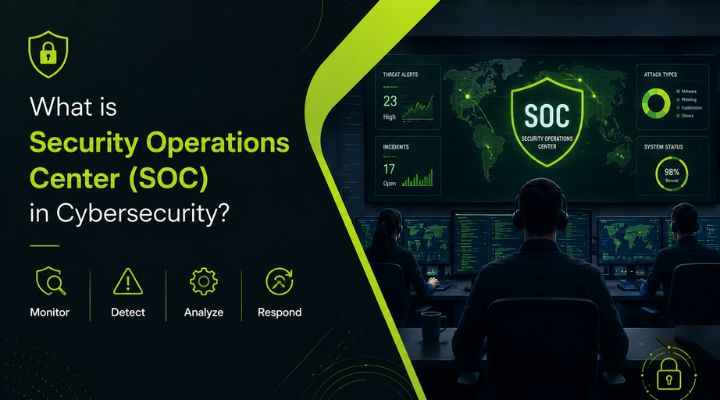
A Cybersecurity SOC Analyst is a cybersecurity professional who monitors, detects, investigates, and responds to cyber threats inside an organization’s network and systems.
“SOC” stands for Security Operations Center a centralized team responsible for defending an organization against cyberattacks 24/7.
What a SOC Analyst Actually Does?
A SOC Analyst is not just “watching dashboards.” The real job is:
- Monitoring security alerts
- Investigating suspicious activity
- Detecting malware, phishing, ransomware, and attacks
- Responding to incidents before damage spreads
- Using security tools like SIEM, EDR, and threat intelligence platforms
- Escalating serious threats to senior security teams
Typical daily activities include:
- Reviewing logs and alerts
- Analyzing failed login attempts
- Investigating unusual traffic
- Blocking malicious IPs/domains
- Writing incident reports
- Coordinating with IT/security teams
How to Become a SOC Analyst?
Explore the complete SOC Analyst career path with in-demand cybersecurity skills, SOC tools, job responsibilities, certifications, and future career scope
SOC Analyst → Security Engineer → Threat Hunter → Incident Responder → Security Architect → SOC Manager
Demand & Salary
SOC Analysts are in high demand because:
- Cyberattacks are increasing globally
- Companies need 24/7 monitoring
- Compliance regulations require security operations
In India, entry-level SOC Analysts commonly earn between ₹3–8 LPA depending on skills, certifications, internships, and practical experience. Experienced professionals can earn significantly more.
Role of the Security Operations Centre
We know what is a security operation centre; now let’s look at the key role of the SOC.
It is to make sure that the threats are kept at a distance, analyse for any suspicious activities and give a fast response to minimise the damage in case any bug enters the system.
Major duties of the SOC include:
- Consistent Watch on The System
The team of security analysts consistently monitor the system and user behaviours, activity, logs and network traffic on a real-time basis. This is to identify the threat as soon as possible. - Identify Threats
With the help of advanced tools, malpractices like phishing, along with malware, any insider threats to the system and any strange patterns are identified. These can pose a threat. - Damage Control
In case of a confirmed threat, the team immediately detaches the affected systems to prevent any further damage. - Controlling the Vulnerability
Regular scanning is one preventive strategy that helps identify vulnerabilities before attackers exploit them. - Adhering to Compliance reporting
It is a responsibility of the SOC team to prepare and maintain security reports and audit logs. This is done for the management.
These duties are important to maintain and protect customers’ trust, reduce downtime, and protect financial stability as well.
Working of the Security Operations Centre
The security operations centre functions based on a well-structured, multi-layer model. From generating alerts to the deeper investigation by experts, a system is followed.
Describing the order of the process below:
- Alert generation by monitoring tools
- Validation of the alert
- Further investigation
- Containment
- Resolving
- Reporting
Organisations also depend on software platforms for real-time threat detection and reporting.
Modern Cybersecurity & Significance of The Security Operation Centre
The reliance on data and cloud usage has led to an increase in cyberattacks. If they are not controlled in time, the losses can be in the millions and also damage the company’s reputation in the market.
The major benefits of SOC include:
- Identifying breaches in speed
- Reduction in financial losses
- A powerful compliance
- Constant monitoring to prevent threats
- Increased confidence of stakeholders
SOC is essential for companies to identify threats at a very early stage. These could go unnoticed if not monitored and cause severe damage.
Tools Used in a Security Operations Centre
The SOC tools and technologies are essential for its functioning. It uses the specialised tools for:
- Security information
- Automation of responses
- Detecting Endpoint and responding accordingly
These include- Firewalls & IDS/IPS systems and Threat intelligence platforms.
Important Roles in a SOC Team
The team consists of many experts working together. The specialised roles include the following:
- Security Analyst (Tier 1)
- Security Analyst (Tier 2)
- Incident Responder
- Threat Hunter
- Security Operations Centre Manager
The person working on each of these roles ensures that alerts are managed effectively and accurately.
Freshers and students who wish to opt for a career in SOC start as entry-level analysts.
If you wish to acquire these skills, opting for a well-designed certification course can definitely help.
For example, 3.0 University (3.0 UNI) offers online courses on cybersecurity, which will help in getting a hands-on basic understanding.
Enrol now for SOC Analyst programs here: Certified SOC Analyst Course Online in India
Skill Set Required to Work in SOC
For a professional working in an SOC team, both technical and soft skills are equally important. Listing these skills in the table below:
Technical Knowledge | Soft Skills |
Networking fundamentals | Analytical mindset |
Linux basics | Meticulous observation skills |
Log analysis | Clear communication |
Incident response techniques | Ability to work under pressure |
Threat intelligence interpretation | High efficiency |
Having the perfect blend of these skills gives you the ability to make accurate decisions in the dynamic functioning roles of SOC.
Understanding SOC vs NOC
Just like the SOC, there also exists the NOC. But what exactly is it? The NOC, i.e., Network Operations Centre, is the system in place that’s focused on managing the performance and trustworthiness of the company’s network infrastructure.
Though both systems work for IT, their goals are different from each other.
The table below clarifies the differences in SOC and NOC:
Factors | Security Operation Centre (SOC) | Network Operations Centre (NOC) |
Major goal | Protection of systems from cyber threats | Manage network performance |
Focuses on | Monitoring to maintain security and incident response | Monitoring network and maintenance of it |
Primary functions | Identify threats, do damage control and analyse vulnerability | Monitor network performance and troubleshoot in case of outages |
Tools used | SIEM, EDR, SOAR, threat intelligence platforms | Network monitoring tools, performance dashboards |
Important roles | SOC analysts, threat hunters, incident responders | Network engineers, system administrators |
Type of response | Responds to cyberattacks and breaches | Responds to network failures or downtime |
For the company to benefit the most, these two teams must work in synergy.
Even after having varied goals, collaborating is feasible for these teams.
To give an example:
- When the NOC identifies unusual network traffic, the SOC starts investigating for probable cyberattacks.
- Contrary to this, when the SOC blocks malicious traffic, the NOC makes sure that the network’s performance is stable
This collaboration helps organisations maintain both security and network reliability.
The Future of Security Operations Centres
Automation and artificial intelligence are key to the future of SOCs. AI-powered threat detection is being incorporated into products by businesses like Cisco and Darktrace.
Future SOC settings will prioritise:
- Automated reaction to incidents
- Cloud-based security surveillance
- Frameworks for zero trust
- Proactive threat hunting
Looking at the speed of digital transformation, the need for SOC professionals globally is going to increase.
Conclusion
The SOC, Security Operations Centre, is the core for cybersecurity of a company.
An important function of the SOC is to prevent threats and cyberattacks through consistent monitoring.
The Network Operations Centre, or NOC, system works more on the network infrastructure. Both of these systems together ensure the best performance and threat protection of the company.
Keeping the current technological advancements in mind, professionals in both these teams are going to be in high demand. For freshers as well as professionals who wish to work in these teams, working on the technical as well as soft skills is a must.

You may also like

Cyber Security Course Eligibility