SOC Analyst Skills, Certifications & Qualifications Guide
- Posted by 3.0 University
- Categories SOC Analyst
- Date May 18, 2026
- Comments 0 comment
Cyberattacks are no longer limited to large enterprises. Today, startups, hospitals, banks, eCommerce platforms, and even educational institutions face constant security threats. As cybercrime continues to rise, organizations are investing heavily in Security Operations Centers (SOC) to detect and respond to attacks before damage occurs.
However, many beginners and IT professionals struggle with one critical question: What are the actual SOC analyst skills companies look for?
The confusion becomes even bigger when job descriptions demand experience with SIEM tools, threat intelligence, incident response, log analysis, scripting, and communication skills all at once.
The good news is that becoming a SOC Analyst does not require mastering everything on day one. Instead, you need the right combination of technical knowledge, analytical thinking, and practical cybersecurity exposure.
In this guide, we’ll break down the most important SOC analyst skills, qualifications, technical competencies, and soft skills required to build a successful career in cybersecurity.
What Does a SOC Analyst Do?
A SOC Analyst is responsible for monitoring, detecting, investigating, and responding to cybersecurity threats within an organization.
Their daily tasks often include:
- Monitoring security alerts
- Investigating suspicious activities
- Analyzing logs and network traffic
- Responding to security incidents
- Performing threat hunting
- Using SIEM and EDR tools
- Escalating critical threats
SOC Analysts act as the frontline defenders against cyberattacks.
SOC Analyst Qualifications: What Recruiters Look For
There’s no single rigid path into the SOC, but most roles expect a blend of education, certifications, and demonstrable hands-on experience.
Educational background:
● A bachelor’s degree in Computer Science, IT, or Cybersecurity (preferred, not always mandatory)
● A diploma or M.Sc. in Information Security for senior or specialist roles
Industry-recognized certifications:
● CompTIA Security+ — the entry-level baseline almost every recruiter screens for
● CompTIA CySA+ or Cisco CyberOps Associate — the Tier 1 sweet spot
● Microsoft SC-200 and Splunk Core Certified User — strong vendor-specific edge
● GIAC GCIA, GCIH, or Blue Team Level 1/2 — preferred for Tier 2 and above
SOC Analyst Technical Skills That Matter in 2026
The technical bar has shifted noticeably. Simply pattern-matching alerts is no longer enough analysts are now expected to write detection logic, automate response, and reason through adversary behaviour.
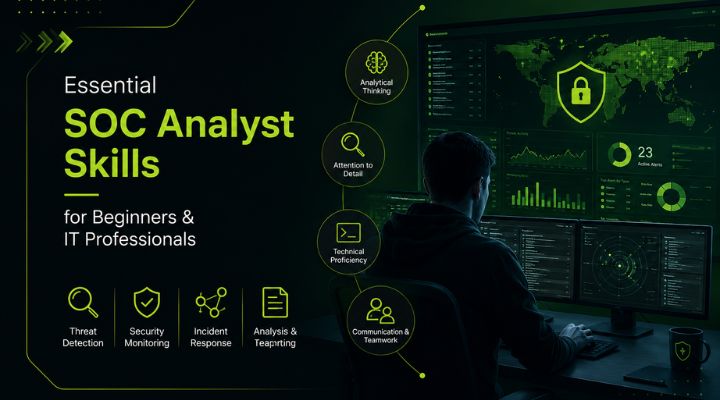
Below are the essential cybersecurity skills for SOC analyst roles that you genuinely cannot fake:
1. SIEM proficiency: Splunk, Microsoft Sentinel, IBM QRadar, or Elastic. Writing SPL or KQL queries is a baseline expectation now, not a bonus.
2. EDR / XDR platforms: Hands-on experience with CrowdStrike Falcon, SentinelOne, or Microsoft Defender for Endpoint.
3. Networking fundamentals: TCP/IP, DNS, HTTP/S, and packet analysis using Wireshark or Zeek.
4. Operating system internals: Windows event logs, Linux syslog, process trees, and basic registry forensics.
5. Scripting: Python for automation, PowerShell for Windows triage, Bash for Linux. Even 100 lines of working code can set you apart.
6. MITRE ATT&CK literacy: You should be able to map an alert to a tactic and technique without reaching for Google.
7. Cloud security basics: AWS GuardDuty, Azure Defender, IAM misconfigurations cloud-native attacks are the fastest-growing alert category.
8. Threat intelligence: Reading IOCs, understanding TTPs, and working with platforms like MISP or Recorded Future.
Soft Skills for SOC Analyst Success
A SOC is a high-pressure, communication-heavy environment, and the soft skills for SOC analyst roles often decide who gets promoted.
1. Analytical thinking: the ability to connect dots across seemingly unrelated logs.
2. Calm under pressure: useful when you’re 90 minutes into an incident and the CISO walks in.
3. Clear written communication: your incident reports will be read by execs, lawyers, and auditors.
4. Curiosity: the strongest analysts treat every alert as a puzzle worth understanding.
5. Teamwork and clean shift handovers: non-negotiable in 24×7 operations.
Recommended Certifications
The following certifications strengthen SOC analyst qualifications:
| Certification | Best For |
|---|---|
| CompTIA Security+ | Beginners |
| EC-Council CEH | Ethical Hacking |
| Cisco CCNA | Networking |
| CompTIA CySA+ | SOC & Threat Detection |
| GIAC GSEC | Security Fundamentals |
SOC Analyst Skills Checklist 2026
Here’s a quick reference of what each tier is expected to bring to the table:
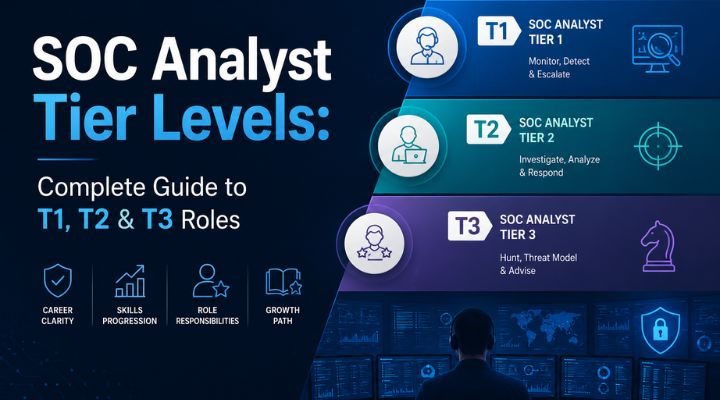
Skill Area | Tier 1 (Beginner) | Tier 2 (Intermediate) | Tier 3 (Senior) |
SIEM | Read & triage alerts | Build new detections | Tune & engineer rules |
Scripting | Basic Python | Automation playbooks | SOAR development |
Incident Response | Follow runbooks | Lead investigations | Threat hunting |
Cloud Security | Awareness only | Hands-on triage | Architecture review |
Communication | Ticket hygiene | Stakeholder updates | Executive briefings |
SOC Analyst Skills for Resume: How to Stand Out
Recruiters spend an average of 6–8 seconds on a CV. Make every word count.
When building your resume, avoid listing generic terms like “cybersecurity knowledge.”
Instead, mention practical competencies such as:
- Investigated phishing and malware alerts
- Worked with Splunk SIEM
- Performed log correlation and incident triage
- Analyzed Windows Event Logs
- Used Wireshark for packet analysis
- Created Python automation scripts
- Recruiters prefer measurable and tool-based experience.
Final Thoughts
The demand for skilled SOC Analysts continues to grow rapidly as cyber threats become more advanced.
But here’s the reality most people ignore: companies are not hiring candidates based only on certifications anymore. They want professionals who can investigate alerts, understand attacker behavior, and respond confidently during incidents.
If you want to stand out in 2026, focus on building real-world SOC analyst technical skills through labs, simulations, hands-on projects, and practical cybersecurity training.
The combination of technical expertise, analytical thinking, and operational experience is what truly separates average candidates from high-performing SOC professionals.
For learners and working professionals looking to build a cybersecurity career, 3.0 University offers an online SOC Analyst Certification Course in India designed to help students gain practical SOC monitoring, SIEM, incident response, and threat detection skills aligned with current industry requirements.
Explore the program here:
SOC Analyst Certification Course by 3.0 University
Enrol now for the SOC Analyst Program at 3.0 University and start building job-ready cybersecurity skills for the modern SOC environment.
Frequently Asked Questions
1. What are the top skills needed to be a SOC analyst?
SIEM proficiency, networking fundamentals, scripting (Python/PowerShell), MITRE ATT&CK knowledge, and strong analytical thinking remain the core five in 2026.
2. Can I become a SOC analyst without a degree?
Yes. Many analysts break in through certifications such as Security+ and CySA+, combined with home-lab projects and platforms like LetsDefend. Demonstrated skill often outweighs formal education at the Tier 1 level.
3. Which certification is best for a beginner SOC analyst?
CompTIA Security+, followed by CySA+ or Microsoft SC-200, offers the strongest entry-level signal to recruiters.
4. How long does it take to become a SOC analyst?
With focused study and consistent lab practice, 6 to 12 months is realistic for an entry-level Tier 1 role.
5. Is the SOC analyst role being replaced by AI?
No. AI is automating low-level alert triage, but human judgement, context, and live-incident decision-making remain irreplaceable. The role is evolving, not vanishing.
6. What programming language is most useful for a SOC analyst?
Python remains the highest-leverage language because of its use in automation, log parsing, and SOAR playbooks. PowerShell is a close second for Windows-heavy environments.

You may also like
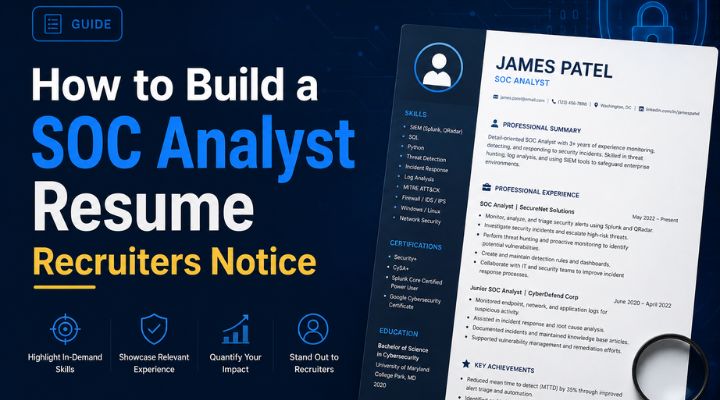
How to Build a SOC Analyst Resume & Job Application?