
How to protect seniors from online scams?
- Posted by 3.0 University
- Categories Cyber Security
- Date April 28, 2025
- Comments 0 comment
Why Seniors Are Increasingly Targeted Online?
Seniors often get drawn into cyber scams—there’s just something about the way scammers zero in on those who have a bit more financial stability. Many older adults hold onto substantial savings through retirement funds, pensions, or even the value of their homes, making them easy targets for internet fraudsters seeking quick money.
In general, the views that emanate are that since the senior folks of our society usually are not entirely up-to-date with the latest tech trends, there’s a tendency of them missing the subtle hints in phishing emails, unusual phone calls, or sketchy online links.
Ironically and haplessly, it doesn’t seem to help that some seniors have a predisposition of blindly trusting unsolicited messages, and inadvertently disclosing personal and banking details.
Besides they need to be information on the usage and application of cybersecurity for mobile devices.
Online platforms—like those for banking, social networking, or even telehealth services—keep piling on more complexity, and many seniors haven’t quite gotten the hang of navigating these safely yet.
As a result, crafty cybercriminals keep refining their techniques, from posing as tech support to faking social media profiles— all designed to exploit limited digital know-how.
In the end, this awkward mix of solid financial assets and a low familiarity with modern technology really explains why older adults are disproportionately targeted online.
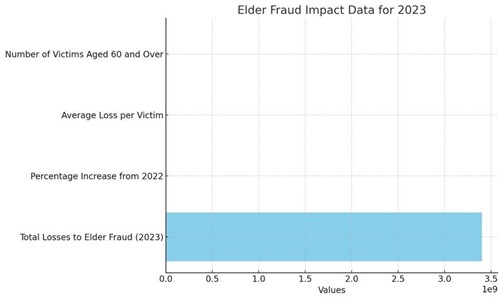
In the above shown bar chart, there’s a visually signifying aspect of the financial impact of elder fraud in 2023.
It also depicts the sums related to losses from scams targeting seniors, which further highlights weighty figures such as over 3.4 billion dollars in total losses, an 11 percent increase from the previous year, an average loss of about 33,915 dollars per victim, and over 101,000 victims aged 60 and older.
Besides, the chart underlines the serious implications of fraud on elderly individuals, particularly in terms of their financial stability and the prevalence of scams.
Importance of Internet Security for Seniors
We all know what’s now woven into everyday life- needless to say, it’s digital technology; and of course, seniors are the most vulnerable elements that often end up getting exposed to online scams and cyberattacks without even realizing it.
A majority population of older people enthusiastically use online banking, telehealth, and social media—even though they might not fully grasp the sneaky dangers that lurk behind these services.
It seems that their limited hands-on experience with cybersecurity basics, mixed with a steady financial foothold and a natural trust in digital messages, generally makes them easy targets for scammers using phishing, fake tech support, and social-engineering tricks.
In most cases, a little extra effort in internet safety education for seniors goes a long way toward closing these knowledge gaps and defending against identity theft and financial loss.
This teaching often boils down to simple routines like setting up strong passwords, spotting fishy or suspicious messages, and keeping software and antivirus programs up to date.
Community efforts, family involvement, and specially designed resources that cater to older adults all play a part in building a strong defence against these cyber threats. Visual guides that lay out clear educational pathways, like those depicted in the image, subtly underline how crucial it is to have broad and accessible cybersecurity programs tailored to the unique needs of seniors.
How to Prevent Identity Theft Among Seniors?
Helping seniors protect their personal data calls for looking at things from more than one angle—it’s not just a tech problem, but a matter of everyday habits too. A smart move is to come up with strong, unique passwords that skip the obvious choices (think birthdays or pet names), which, in most cases, lowers the chance someone unwanted gets in.
Then there’s two-factor authentication (2FA); turning that on adds an extra, important barrier that makes breaking in a whole lot harder. Offline steps matter as well—shredding sensitive documents and even freezing credit files can really help prevent identity theft, whether the threat comes from physical theft or crafty fraud.
It’s also pretty key to show seniors how to spot phishing, since those sketchy emails, texts, or calls asking for personal info can sneak up on anyone. All these measures together build a kind of safety net that generally reduces the risks of identity theft for older people, who are often targeted because they might not be up-to-date on the latest cyber tricks while handling stable finances.
The structured educational pathway demonstrated in the table shows how, with a little tailored guidance, seniors can really gain the know-how to tackle and outsmart online scams.
Age Group | Identity Theft Claims | Percentage of IT Claims | Financial Losses | Percentage of Total IT Losses |
Under 20 | 18174 | 4.33% | $40.7 million | 0.49% |
20 to 29 | 62410 | 14.87% | $360.7 million | 4.40% |
30 to 39 | 88138 | 21.00% | $1.2 billion | 14.63% |
40 to 49 | 84052 | 20.02% | $1.5 billion | 18.29% |
50 to 59 | 65924 | 15.70% | $1.7 billion | 20.73% |
60 and over | 101068 | 24.08% | $3.4 billion | 41.46% |
Identity Theft Statistics Among Older Adults
Practical Cybersecurity Tips for Seniors
Sailing the online world safely isn’t just about having a keen eye—it means taking hands-on measures, especially since seniors often face their own unique risks.
Rather than waiting for trouble, older users might think of installing a solid antivirus program that can tackle malware and even the nastier ransomware while keeping their devices updated so that pesky security gaps get fixed promptly.
It also helps to be smart when connecting to the internet; generally speaking, dodging public Wi-Fi for sensitive tasks and making sure that sites show HTTPS protective locks can really lower the chances of someone snooping on your personal details.
Cybersecurity awareness is extremely for all especially, for senior citizens. Equally, a good rule of thumb is to avoid sharing private information over unsolicited emails or phone calls—a familiar warning goes, “Be cautious about how much personal information you provide on social networking sites.
The more information you post, the easier it may be for a hacker or someone else to use that information to steal your identity, access your data or commit other crimes such as stalking.”
The more information you post, the easier it may be for a hacker or someone else to use that information to steal your identity, access your data or commit other crimes such as stalking.” (Online Safety Tips For Older Adults).
When you mix these practical tips with a bit of ongoing advice, you end up with a defense strategy that, in most cases, really helps seniors feel more secure as they navigate the digital scene.
Conclusion
Cybersecurity isn’t only a youth issue—seniors now face risks too in our always-online world. Older folks find themselves hit by a range of scams, from basic phishing emails to clever mobile device exploits; every kind of threat calls for mixing a bit of hands-on learning, common-sense safety tips, and some backup from family or neighbours.
In most cases, teaching seniors simple tricks like how to spot fake messages and create strong passwords not only builds their independence but also helps keep their personal and financial details safe.
It also makes a difference when older adults feel at ease asking for help and using resources that are made just for them; such support can really reinforce their ability to fend off cyberattacks.
Generally speaking, weaving cybersecurity into day-to-day life turns what might seem like a nerdy specialty into a basic life skill everyone needs. Initiatives like those shown in demonstrate—albeit in an unexpected yet accessible way—stress that providing targeted, straightforward programs for the elderly is both a social responsibility and, frankly, an achievable goal in this digital age.

You may also like
Cyber Security Course Eligibility