Why EV Charging Infrastructure Needs Strong Cyber Security?
- Posted by 3.0 University
- Categories Cyber Security
- Date May 12, 2026
- Comments 0 comment
India has added a lot of electric vehicle charging stations in the fifteen months. The number of public charging stations has gone up from 5151 in the 2022 to over 29,277 by the middle of 2025.
This is six times more. This is really great for people who want to use transportation like electric vehicles. At the time it is also something that hackers might like because it gives them more opportunities to try and break into the system and cause problems.
Every new charger is a small computer wired to the power grid, your bank account, and your car. And right now, a lot of these computers are running with the digital equivalent of an unlocked front door.
This blog breaks down the cyber security risks in EV charging stations, the real attacks that have already happened, what makes the underlying protocols vulnerable, and what operators, drivers, and future cyber professionals can do about it.
The EV Charging Boom Has a Hidden Backdoor
India’s electric mobility story is impressive on paper. EV car sales jumped 77% year-on-year in 2025. Karnataka alone hosts over 6,097 public charging stations. The PM E-DRIVE scheme has earmarked ₹2,000 crore to push the count toward 72,000.
But here is the uncomfortable part. The EV-to-charger ratio in India still sits at roughly 1:135, far from the ideal 1:20. To catch up, operators are deploying chargers fast. And anything built fast tends to skip security reviews.
The Indian government has already acknowledged this. The Ministry of Road Transport and Highways said something in the Lok Sabha. They think that Electric Vehicle charging stations in India can be hacked. This means Electric Vehicle charging stations are not safe from cyber attacks.
CERT-In has told people about the problems, with Electric Vehicle charging devices times. They want people to know that Electric Vehicle charging devices are not safe.
In short, the charging network is racing ahead. The EV charging network security posture is not keeping up.
An EV Charger Is Really a Computer in Disguise
Most people see a charger as a metal box with a cable. From a security standpoint, it is something very different.
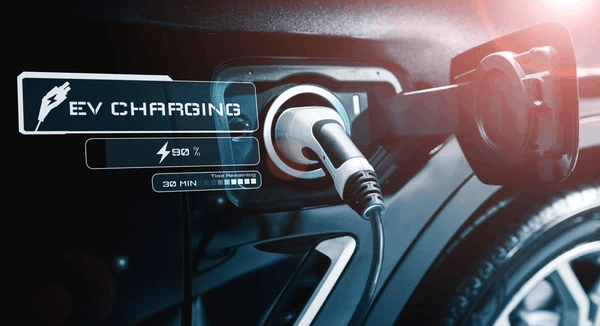
A modern public charger is an Internet of Things (IoT) device that talks to at least five other systems at once:
- The power grid (to draw and balance energy)
- The Charging Station Management System (CSMS) in the cloud
- A payment gateway and your card or UPI app
- The driver’s smartphone app via Bluetooth or Wi-Fi
- The electric vehicle itself, exchanging session data
Compromise any one of these links and you have a foothold into the rest. That is the core reason EV charging station cyber security is not a niche concern -it is a critical infrastructure problem.
Real Cyber Attacks on EV Charging Stations That Have Already Happened
These are not theoretical risks. The incidents below are documented.
Russia, February 2022
Charging stations on Moscow–St. Petersburg highways were hacked and displayed anti-war messages on their screens. The chargers were taken offline for days.
UK, Isle of Wight (April 2022)
Hackers took over public charging station displays and broadcast explicit content for hours. A reminder that even small networks are targets.
Shell EV Charging Logs Breach (2024)
Servers storing millions of EV charging logs from Shell’s network were compromised. Sensitive user data reportedly ended up for sale on the dark web.
Spanish EV Charger Ban in the UK happened in February 2024.
The UK stopped selling some Spanish-made EV chargers because they were worried about security.They thought this could be a problem for their national energy security.
Multi-Provider Data Leak (November 2024)
A threat actor got into the system. Shared around 116,000 records with sensitive information.This information was from EV charging providers.It included things, like email addresses and banking details.
The person got this information by finding weaknesses in the software of EV charging stations.
Academic Zero-Day Disclosure (2024)
Researchers presenting at ACM AsiaCCS found 6 zero-day vulnerabilities in each of 16 representative live EV charging management systems. Same flaws, repeated across vendors.
The pattern is consistent. Cyber attacks on EV charging stations are increasing in both frequency and sophistication.
The Biggest Cyber Security Risks in EV Charging Stations
Let’s get specific. These are the attack types operators and drivers should know about.
1. QR Code Phishing (“Quishing”)
Attackers paste fake QR code stickers over the legitimate one on a charger. Scan it, and you are sent to a counterfeit payment portal that steals your card details. The driver only realises something is wrong when the car isn’t actually charging.
2. Ransomware
Some attackers can lock up the charger management system. Theyd want cryptocurrency to unlock it. This actually happened in 2023 to a charging network in the United States and Europe and it made a lot of charging stations stop working.
3. Malware That Spreads to Your Vehicle
If a charger is not safe it can put malicious software into your electric vehicle when you are charging it. When your car has this software the attacker can find out where you are, mess with your cars battery or even use your car to get into your home network.
4. Data Theft and Payment Fraud
The payment systems at charging stations are not always secure attackers can get your credit card number, your RFID token or your account information. Then they can make a copy of your RFID token and use it to charge their cars for free. You will get the bill.
5. Grid Manipulation Attacks
This is really scary. If bad people can control a lot of chargers at the time they can create artificial demand spikes Some cybersecurity teams in Europe have already practiced this. Shown that it could make the power go out.
6. Denial-of-Service (DoS)
If someone does a Denial-of-Service attack on a charger they can make one charger stop working or a whole group of chargers stop working or even all the chargers in an area to stop working. This means that there is a spectrum of electric vehicle charging security threats that this industry is currently plagued with.
Why the OCPP Protocol Is the Soft Underbelly?
If you read about EV charging protocol security, one acronym keeps coming up: OCPP -the Open Charge Point Protocol. It is the language chargers use to talk to their backend management systems, and India’s Bureau of Energy Efficiency (BEE) mandates it for public chargers.
Here is the problem. The widely deployed version, OCPP 1.6J, has well-documented weaknesses:
- Weak authentication. Many implementations skip multi-factor authentication entirely. Attackers can hijack a connection using stolen credentials.
- Improper session handling.There is a problem with how sessions are handled. The rules do not say what should happen when a new connection comes in and an old one is still being used. The Israeli security company SaiFlow found out that this problem lets attackers turn off chargers from away and take important information.
- Weak TLS implementations. Some chargers use security measures. When people in charge use security versions bad guys can get in the middle of things and do bad stuff by using old protocols or by taking advantage of problems, with how sessions are started again.
- Hard-coded passwords. People found out that Schneider EV chargers come with these set passwords, which lets remote attackers install bad software and turn off the charger.
OCPP 2.0.1 fixes much of this with proper security profiles, certificate handling, and encryption. But adoption is patchy, and backward incompatibility means many operators stay on the older, weaker version.
This is why EV charging protocol security has become one of the hottest research areas in critical infrastructure security today.
Why This Is a Bigger Deal in India Specifically
India’s charging market is in a unique spot. The growth curve is steep, but the security maturity is uneven.
- Aggressive rollout, thin reviews. With ₹10,000+ crore in private investment chasing the PM E-DRIVE target, operators are prioritising deployment speed over security audits.
- Heavy oil-marketing-company involvement. IOCL, BPCL, and HPCL collectively run a huge share of the public network. Their forecourt chargers inherit fuel-retail IT systems that were never designed for IoT.
- Tier-3 city expansion. Over 12,000 chargers now sit in Tier-3 and non-metro areas where local operators may have minimal in-house cyber security expertise.
- Grid sensitivity. Indian grids are already stressed during peak summer demand. A coordinated smart charging cyber security risks event could cause real outages.
CERT-In is aware. The OCPP standard is being upgraded. But the gap between what is deployed and what is secure is still large. This is the core of India’s EV infrastructure security challenges.
How EV Charging Networks Can Defend Themselves: A Practical Playbook
For Charge Point Operators (CPOs), Original Equipment Manufacturers (OEMs), and CSMS providers, here is a step-by-step framework.
Step 1: Upgrade to OCPP 2.0.1 with security profiles 2 or 3. Stop running 1.6J in production wherever possible. Enforce TLS 1.3, certificate-based authentication, and mutual TLS between charger and backend.
Step 2: Move charger-to-backend traffic off the public internet. Use APN (private cellular) or VPN tunnels. This shrinks the attack surface dramatically.
Step 3: Enforce strong identity for everything. Multi-factor authentication for admins. Unique credentials per charger. Rotate keys regularly. No shared logins, ever.
Step 4: Run continuous vulnerability scans and penetration tests. The global penetration testing market is projected to grow 12.5% annually through 2032 for a reason -it works. Test before attackers do.
Step 5: Patch firmware aggressively. Most documented EV charging station hacking risks were already patched by vendors. The breaches happened because operators didn’t apply the patches.
Step 6: Deploy AI-based anomaly detection. Machine learning models can flag unusual traffic patterns -a charger suddenly drawing 10x normal load, or one initiating thousands of failed auth attempts -and trigger an alert before damage is done.
Step 7: Use digital QR codes on charger screens. This is the cleanest defence against quishing. If the QR is generated dynamically on a screen the attacker can’t physically modify, the fake-sticker attack dies.
Step 8: Comply with recognised frameworks. ISO 27001, SOC 2 Type II, GDPR, and the EU’s NIS2 directive that treats EV charging as critical infrastructure. For Indian operators, align with CERT-In guidelines and the Digital Personal Data Protection Act.
Step 9: Train the humans. Roughly 85% of breaches involve human error. Phishing-aware staff are your cheapest defence.
Step 10: Build a real incident response plan. Tabletop exercises, defined escalation paths, communication templates. Have it before you need it.
The Talent Gap: India Needs More Cyber Security Pros for EV Infrastructure
Here is the part nobody talks about enough.
All the OCPP upgrades and AI detection systems in the world are useless without people who can actually deploy and run them. And India does not have nearly enough of those people for the EV sector specifically.
The Confederation of Indian Industry estimates India needs at least 1.32 million charging stations by 2030.
Each one needs someone monitoring it for EV charging station vulnerabilities, applying patches, and responding to incidents. That is a massive hiring pipeline that does not exist yet.
This is one of the reasons specialised, hands-on learning programmes have started showing up.
3.0 University, for example, offers online courses in AI, Web3, and cyber security that are built around real-world projects -exactly the kind of applied skill set that critical-infrastructure employers are looking for.
Learners get industry-recognized certifications they can put directly on a resume aimed at EV, fintech, or energy-sector roles.
If you are a student or a working professional looking at where cyber security demand is heading, EV infrastructure is one of the most under-served verticals in the country.
What EV Drivers Can Do to Stay Safe
You do not need to be a security expert to protect yourself at a charging station.
- Inspect the QR code before scanning. If it looks like a sticker pasted over another sticker, don’t scan. Use the operator’s app instead.
- Stick to known networks. Tata Power, Ather Grid, Jio-BP Pulse, Statiq -established brands invest more in security.
- Keep your EV software updated. Vehicle manufacturers push security patches the same way phones do. Install them.
- Use a virtual or one-time card for charger payments. UPI with a transaction limit is safer than a stored credit card.
- Watch your bank statements. Any unexpected charging-related transaction should be flagged immediately.
- Avoid unknown free public Wi-Fi while connected to your EV’s infotainment system at a charger.
Small habits, big impact.
The Road Ahead
The EV revolution is not slowing down. Neither are the attackers. What changes from here is whether security gets baked into the next 70,000 chargers India builds, or bolted on after the first major incident.
The smart money is on security by design -building cyber security in at the firmware, protocol, cloud, and operations layers from day one. That requires investment, regulation and importantly trained people who know a lot about the energy sector and modern cyber threats.
Cyber security for Electric Vehicle charging is no longer something that we can choose to have or not. It is the difference, between a clean mobility future that actually works and one that turns into a cyber problem that gets worse slowly.
Anyone building a career at this intersection -whether through self-study or structured programmes like the ones offered at 3.0 University is positioned for one of the highest-leverage fields of the next decade.
Frequently Asked Questions (FAQs)
- Can someone really hack an EV charging station?
Yes it has happened times. There have been cases like the 2022 Russia and UK charging station hacks the 2024 Shell EV charging logs breach and the November 2024 leak of around 116,000 records from charging providers. Researchers have also found zero-day vulnerabilities in 16 commercial EV charging management systems.
- What is OCPP. Why is it a security concern?
OCPP (Open Charge Point Protocol) is how EV chargers talk to their management systems. The old OCPP 1.6J has authentication and some security issues that let hackers get in. OCPP 2.0.1 is better. Not many are using it.
- Is my electric car at risk when I plug it in?
Generally it’s risk at established public networks. The bigger risks are payment fraud via QR codes and data theft from charging logs. Sometimes a hacked charger could send software to the vehicle so keeping your EV software updated is important.
- What are the common cyber attacks on EV charging stations?
These include QR code phishing, ransomware attacks on charging operators data theft from charging logs RFID cloning for charging, denial-of-service attacks that take chargers offline and grid manipulation attacks.
- How is India protecting its EV charging infrastructure?
CERT-In issues advisories for EV charging products. The Bureau of Energy Efficiency says public chargers must use OCPP. Operators are required to follow data-protection norms under the DPDP Act.. Enforcement and audit maturity vary widely across operators.
- What career opportunities exist in EV charging cyber security?
This is a growing area in both security and energy. Roles include OT/IoT security analyst charging network security engineer, EV penetration tester and CSMS security architect. Some programs focus on real-world projects in critical-infrastructure security.
- Are home EV chargers at risk?
Yes. Some research labs have found vulnerabilities in home charger apps. If a home charger is on the Wi-Fi as your laptop and phone a compromised charger can become an entry point into your home network. Use a guest Wi-Fi network for IoT devices like your charger.
- What is the biggest single thing operators can do to improve security?
Stop using internet exposed OCPP 1.6J. Move to OCPP 2.0.1 with security profile 3 over a private APN or VPN. That one change closes most of the exploited attack paths.
Final Thoughts
The story of EV charging in India over the five years will not just be a story about kilowatts and corridors. It will also be a story, about whether the country can keep its mobility infrastructure secure from a steadily worsening threat landscape.

You may also like

Cyber Security Course Eligibility