Is Coding Necessary for Ethical Hacking Skills?
- Posted by 3.0 University
- Categories Ethical Hacking
- Date August 22, 2025
- Comments 0 comment
Busting the Stereotype: Ethical Hacking Reality vs Myth
It’s often thought that ethical hacking is only for coding whizzes, which overshadows the other important skills you need.
Lots of people who want to get into hacking or already work in the field think they absolutely have to be amazing at programming to even start.
The concept faces increasing disproof because ethical hacking requires security-minded thinking instead of programming expertise.
The ability to think critically and solve problems together with basic networking knowledge will help you succeed in cybersecurity even if you are not an expert programmer.
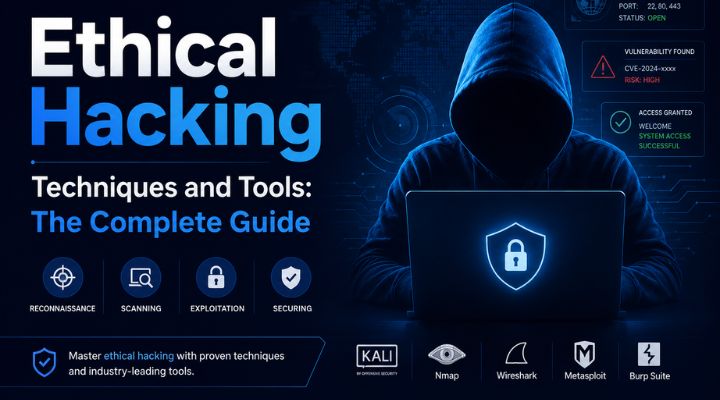
You can begin using Kali Linux and Wireshark tools for ethical hacking without needing extensive coding knowledge.
The growing demand for ethical hackers requires a comprehensive understanding of necessary skills because of programs like the Ethical Hacking Course at 3.0 University.
Generally speaking, this not only gets rid of some common myths, but also gets all kinds of different people interested in exploring ethical hacking.
Ethical Hacking Career: The Big Picture
The digital world’s relentless evolution sees the need for cybersecurity experts, and especially ethical hackers, reaching levels never seen before.
It’s projected that by 2025, essentially every kind of industry will be looking for white-hat hackers with the skills to protect their systems as cyber threats become ever more numerous.
How to become an ethical hacker?
This growing market, in most cases, suggests that a career in ethical hacking comes with lots of opportunities. For example, there are positions with tech giants or even government agencies.
The reality is that while, yes, advanced coding abilities can certainly enhance what one can do, they aren’t actually a must-have to get your foot in the door.
Those just starting out, generally speaking, can focus on things like basic networking, operating systems, and core security ideas. Think of this as a strong base before adding programming know-how little by little.
And, to help those thinking about ethical hacking, you have places like 3.0 University offering customized Ethical Hacking Courses.
These courses give you the practical know-how and knowledge needed to get started on this career path.
The structured programs enable beginners to enter ethical hacking without requiring immediate advanced coding abilities.
Job Title | Median Annual Salary (USD) | Projected Job Growth (2022-2032) |
Information Security Analyst | 120,360 | 32% |
Penetration Tester | 81,735 | 32% |
Security Engineer | 88,387 | 32% |
Information Security Manager | 109,732 | 32% |
Certified Ethical Hacker | 79,256 | 28% |
Ethical Hacking Career Overview
Ethical Hacking for Beginners: Where to Start?
The perception that coding represents the main obstacle for aspiring ethical hackers leads some individuals to lose interest.
The fundamental knowledge of networking and operating systems together with security principles serves as the initial requirement for beginners.
The development of a solid foundation requires students to grasp these essential concepts before they tackle advanced subjects. The learning of coding skills becomes more effective after students begin working with specific tools.
The combination of Kali Linux and Wireshark and Metasploit platforms enables users to acquire hacking skills through tools that do not require extensive coding knowledge.
Beginners should prioritize learning these core skills first before they start adding coding skills to their skillset.
The Ethical Hacking Course at 3.0 University provides an accessible entry point into the field for students.
The most beneficial approach for beginners involves learning basic principles before advancing to complex code-based knowledge.
Do You Need Coding for Ethical Hacking?
The public commonly associate ethical hacking with skilled programmers who easily navigate complex programming code. The common perception of this work simplifies its nature and requirements for achievement.
People commonly believe coding skills are necessary for entry-level ethical hacking yet the reality shows that coding ability is helpful but not required.
Is coding necessary for ethical hacking?
The testing and vulnerability assessment process can be performed by people who use Kali Linux, Wireshark and Metasploit tools without requiring extensive programming knowledge.
Sreekanth Malladi correctly states that ethical hackers adopt the perspective of hackers while emphasizing that strategic thinking surpasses coding abilities.
New ethical hackers should begin by mastering networking fundamentals and operating system knowledge before acquiring coding abilities for career advancement.

This chart illustrates the importance of various factors in ethical hacking. While coding skills are helpful, they are not essential for entry-level positions. More critical are the use of specialized tools and a strategic mindset, followed by foundational skills and training programs.
Ethical Hacking Course in Mumbai
Prerequisites
The CISEH course does not demand any experience with ethical hacking or IT yet basic computer and internet skills are beneficial for new students.
Operating systems including Windows and Linux together with programming languages HTML, PHP, Python, SQL, and JavaScript should be well understood by students.
The aspiring ethical hacker needs both networking knowledge and security law awareness for success.
Certifications
- The Certified Ethical Hacker (CEH) certification from EC-Council maintains its position as the top ethical hacking certification among multiple institutions that offer such certifications.
- The PenTest+ certification from CompTIA teaches students penetration testing skills across different network environments.
- The OSCP certification from Offensive Security delivers hands-on training through its challenging examination which demands advanced penetration testing expertise.
- The Certified Security Testing Associate (CSTA) program delivers basic security testing education for entry-level students.
- The Computer Hacking Forensic Investigator (CHFI) certification specializes in digital forensic investigation of cybercrimes.
- The GIAC Penetration Tester (GPEN) certification provides professional training about basic security principles as well as advanced ethical hacking techniques.
Opting for the apt course
The selection process for an ethical hacking course should focus on the following elements:
- The institute must be authorized by relevant authorities and provide certifications which are recognized worldwide.
- The trainers at your institute should possess both deep knowledge about cybersecurity and real-world experience in cybersecurity.
- The training program should include fundamental subjects while devoting equal emphasis to practical applications through laboratory work and real-world assignments.
- The educational facility provides students with career support along with job placement assistance as part of its services.
- Students who want to understand the quality of training and their overall experience should check the testimonials from former students.
- Students should select training programs that match their financial capabilities and available study time.
- The selection of an ethical hacking course in Mumbai needs thorough evaluation of multiple factors to achieve optimal results in your cybersecurity career. [Link1]
Ethical hacking Online Program in Mumbai
- Places like 3.0 University even offer Ethical Hacking Courses [cited] to help you build the skills and frameworks you need at your own speed. Besides,
- NetTech India provides a full curriculum that teaches different ethical hacking concepts.
- Mr Web Security teaches students through hands-on experience and assists students with their placement needs.
- Axximum Infosolutions Pvt Ltd delivers its training through both online and classroom formats with emphasis on practice-based instruction.
- ICIT Computer Institute teaches professional ethical hacking through live penetration testing projects to students.
- Hacktech Media Digital Marketing & Cyber Security & Ethical Hacking Institute provides online appointment booking and WiFi services in addition to complete cybersecurity training.
The ethical hacking course at skillogic.com achieves EC-Council accreditation along with IIFIS and NASSCOM FutureSkills and CompTIA.
The program provides students with 24/7 lab access together with practical industry tool training through Kali Linux and Metasploit and career services and placement opportunities.
- Ace Infosec Solutions provides services such as ISO 27001 Certification Consultants and Online Training Institute For Cyber Security and Online Training Institute For Ethical Hacking.
- Online ethical hacking programs provide several benefits to students
- The curriculum extends from basic cybersecurity education to sophisticated hacking methods.
- The program delivers high-quality educational experiences through instructors who possess both practical expertise and industry experience.
- The program delivers hands-on learning through practical exercises combined with real-world simulations that boost problem-solving capabilities.
- Students gain advantages from flexible learning options because they can determine their own learning speed while managing their academic work and other responsibilities.
- The program enables students to connect with peers who share similar interests which could lead to future professional collaborations.
Ethical hacking course costs in India
- The prices of ethical hacking courses in India differ substantially according to the recognition level of the course and the depth of technical content and availability of hands-on lab experiences and tools.
- The entry-level certification costs begin at ₹15,000 while international advanced certifications reach prices up to ₹2,00,000.
- Short-duration programs lasting 2-3 months have costs between ₹1,500 and ₹15,000.
- The expenses for 4-6 month programs range between ₹20,000 and ₹50,000.
- The expenses for long-duration programs (6-12 months) range from ₹50,000 to ₹1,50,000 or exceed this range.
Key considerations
Students should choose courses that have accreditation from organizations such as the EC-Council, IIFIS, NASSCOM FutureSkills and CompTIA.
Choose training programs which deliver practical experience with tools and techniques used in the industry.
The institutes should provide career assistance that includes resume development alongside interview coaching and job placement services.
Choose an institution by researching their curriculum and faculty experience and reviewing feedback and placement statistics. [Link2]
Conclusion
People commonly believe ethical hacking demands sophisticated coding abilities yet the field actually depends on proper mental approach. The ability to work with Python C and Java languages [cited] proves useful for automation tasks and exploit exploration.
The core of ethical hacking involves curiosity and strategic thinking to resolve problems. You can begin learning ethical hacking through basic networking and security education instead of immediately diving into complex coding.
In most cases, mixing what you know practically with a hacker’s way of thinking is what makes you an expert. It proves that you don’t need to be some kind of coding whiz; you just need to be someone who’s willing to dig into the tricky parts of cybersecurity.