Can AI Replace Ethical Hackers? Human + Machine Hybrid Security Models
- Posted by 3.0 University
- Categories Artificial Intelligence
- Date September 26, 2025
- Comments 0 comment
The AI Disruption in Cybersecurity
Artificial intelligence advancements at a faster rate are transforming multiple business sectors through their impact on cybersecurity operations. Organizations keep adopting AI systems which leads to the question of whether AI technology can replace ethical hackers.
The debate between machine-based operations and human ethical hacker problem-solving skills emerges as the main point of this inquiry. The practice of using AI to compete against ethical hackers has gained traction because AI systems excel at performing automated security checks and fast threat detection.
The implementation of automated systems raises concerns because ethical hacking demands human-level creativity and adaptability which AI systems have not mastered. A security approach that unites human creativity with machine efficiency seems to be the most effective solution.
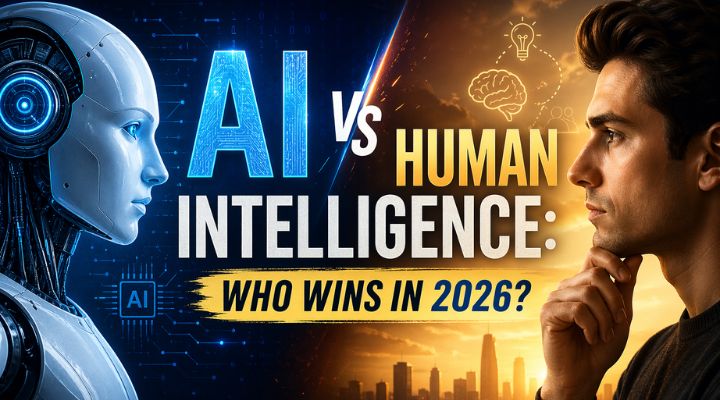
AI systems function best when they assist human security experts instead of attempting to replace them completely. The partnership between humans and machines demonstrates that AI enhances the field but ethical hacking’s future depends on their collaborative work as shown in the image example.
AI vs Ethical Hackers
AI technology functions as an essential tool which ethical hackers use to improve their work instead of opposing them. AI technology enables ethical hackers to perform their vulnerability detection work more efficiently through its speed and ability to process large volumes of data and predict potential threats.
AI systems perform vulnerability scanning and log analysis and threat intelligence tasks but human operators remain essential for penetration testing and creative problem-solving and contextual understanding because AI systems cannot match human adaptability and outside-the-box thinking abilities. [Link1].
Role of AI in Ethical Hacking
AI plays an expanding role in ethical hacking as cybersecurity evolves through time.
AI technology enables ethical hackers to perform automatic vulnerability scans and analyse extensive datasets. The system enables security professionals to detect potential vulnerabilities at a faster rate.
The fast pace of operations becomes essential because organizations face overwhelming data volumes and escalating security threats. AI technology enables faster attack prediction and data exploration for access authorization purposes according to research findings.
AI provides valuable assistance to ethical hackers yet it lacks the capabilities of human ethical hackers. AI systems require proper monitoring because excessive dependence on them leads to problems.
The system enhances analysis capabilities through its implementation. Security experts must handle complex security challenges because human intervention remains essential for solving them.
The combination of AI performing automated tasks with ethical hackers designing attack strategies creates the most effective defence mechanism against cyber-attacks as shown in the provided image [cited].
| Study Title | Authors | Publication Year | Key Findings |
| AI-Enhanced Ethical Hacking: A Linux-Focused Experiment | Haitham S. Al-Sinani, Chris J. Mitchell | 2024 | Demonstrated that generative AI, specifically ChatGPT, can significantly enhance and streamline the ethical hacking process, emphasizing the importance of balanced human-AI collaboration. |
| AI-Augmented Ethical Hacking: A Practical Examination of Manual Exploitation and Privilege Escalation in Linux Environments | Haitham S. Al-Sinani, Chris J. Mitchell | 2024 | Showed that generative AI can support manual exploitation and privilege escalation tasks, highlighting benefits like enhanced efficiency and scalability, while also identifying challenges such as ethical concerns related to data privacy and potential misuse. |
| AI+ Ethical Hacker Course | NetCom Learning | 2025 | Offered a comprehensive look at how AI is revolutionizing ethical hacking practices, covering AI integration into traditional hacking methodologies, including enhanced threat detection and automated vulnerability assessments. |
| Strengthening AI Agent Hijacking Evaluations | U.S. AI Safety Institute | 2025 | Identified vulnerabilities in AI agents, emphasizing the need for robust evaluations to mitigate risks associated with AI agent hijacking in cybersecurity contexts. |
| AI in Cybersecurity: Friend or Foe? | EC-Council University | 2025 | Discussed the dual role of AI in cybersecurity, highlighting both its potential to enhance security measures and the risks associated with its misuse, such as the creation of deepfakes. |
AI Integration in Ethical Hacking: Key Findings from Recent Studies
Will AI Replace Penetration Testers?
The fast-paced development of artificial intelligence (AI) requires us to evaluate its impact on penetration testing operations. AI systems perform basic network scanning and system vulnerability detection but they lack the ability to handle sophisticated real-world exploitation techniques.
Penetration testing requires sophisticated methods which go beyond what AI systems can accomplish. The practice of social engineering depends on human thinking patterns to execute its security bypass methods. Experienced ethical hackers excel at context-based exploitation and generate innovative solutions which enable them to handle unexpected challenges that AI systems cannot handle [cited].
AI systems will automate basic penetration testing operations yet human professionals will maintain their essential role in delivering complete penetration testing capabilities that matter most.
The visual representation of “AI automation vs human penetration tester tasks” demonstrates how AI technology will boost human expertise and intuition which remain essential for cybersecurity operations.
Detection Rate | False Positive Reduction |
85% | 5x |
Not specified | Not specified |
Comparison of AI and Human Penetration Testing Performance
Machine Learning vs Ethical Hackers
Machine learning and ethical hacking bring separate capabilities to protect the evolving cybersecurity environment.
Machine learning systems excel at pattern recognition and threat prediction through data analysis yet they lack the creative thinking ability of ethical hackers who approach problems like real attackers do.
The fast-paced nature of threats makes ethical hackers more effective at threat analysis than machine learning systems because they can adapt quickly to unexpected changes.
The involvement of people remains essential because ethical hackers both detect vulnerabilities and develop innovative solutions to address them.
The combination of machine learning with human intelligence enables faster and simpler hacking simulations yet requires both human creativity and situational awareness.
A combined security system that unites machine learning with ethical hacking capabilities will create an optimal defence mechanism against modern cyber threats.
AI in Cybersecurity and Ethical Hacking:
The Hybrid Model Brings Benefits to Multiple Business Sectors
- AI security solutions with human oversight have become standard practice in various business sectors.
- Leading AI Security Integration Industries or Businesses
- The implementation of AI technology enhances visitor authentication and access control and perimeter defense systems in corporate facilities.
- The combination of AI systems at airports and transportation hubs enables the detection of suspicious activities and crowd surveillance.
- The analysis of customer movement patterns through AI technology helps prevent theft and fraud occurrences in retail and commercial areas.
- AI systems protect vital infrastructure points such as power plants and data centers and government facilities from physical and cyber threats.
- AI systems in healthcare facilities work alongside security personnel to protect restricted areas while maintaining patient safety.
- The combination of human operators with AI systems delivers the most effective security solutions for these business sectors. [Link2]
Conclusion – Human + AI is the Only Way Forward
The development of cybersecurity requires an essential combination between human operators and artificial intelligence systems to achieve effective cyber protection.
Future of Ethical Hacking with AI
The future of ethical hacking will involve human testers working alongside AI systems instead of AI replacing them. The security process requires a collaborative approach where each member supports the others in their work.
AI proves useful for performing standard tasks and conducting quick system scans and processing extensive data collections. AI systems lack the ability to perform creative problem-solving and develop instinctual decisions which human ethical hackers naturally bring to security assessments.
The combined security system operates through machine acceleration of processes and human intelligence that enables flexible response to unexpected situations. The security partnership between humans and machines functions as a true collaboration which goes beyond simple task distribution.
AI systems detect security vulnerabilities which human experts verify and potentially exploit for testing purposes. A security system that combines human expertise with AI technology will create the most effective defence mechanism against evolving threats. [cited]
You may also like
How to Future-Proof Your Career in the Age of AI?
How Universities Use Blockchain & AI in Professional Education?