

Blockchain Technology in Healthcare
- Posted by 3.0 University
- Categories Blockchain
- Date January 7, 2025
- Comments 0 comment
Blockchain in Healthcare: Securing Patient Data and More
The joining of technology and healthcare gives a special chance to tackle ongoing problems with data security and management. Recently, the healthcare field is looking more at blockchain technology as a possible way to protect important patient data.
This type of decentralized ledger provides a new way to keep medical records safe while improving data sharing among different parties.
By making patient data transactions unchangeable and transparent, blockchain could help people have more control over their own health information, which is essential in a time when data breaches happen often.
Additionally, using blockchain is likely to make medical recordkeeping easier, cut down on administrative problems, and build trust in healthcare systems.
Thus, learning about blockchain’s role in healthcare is not just about new technology but also a major change for better healthcare data security and reliability, leading to a more trustworthy health system.
Overview of Blockchain Technology and Its Relevance to Healthcare
The growth of technology has led to a reconsideration of old healthcare systems, especially in managing data. When discerning what’s the key to this change, then the answer is ‘blockchain technology’- a decentralized digital record that, most certainly, provides a safe way to store and share health information.
Hence, it’s all the more crucial to learn about healthcare data security blockchain.
Of course, by forming unchangeable records, blockchain promotes and fortifies systems with utmost transparency and trust among parties involved, like patients, healthcare providers, and insurance companies. This decentralization not only improves data safety against breaches but also gives patients more control over their medical records, thus supporting a cooperative healthcare scene.
Additionally, blockchain’s ability to verify transactions can enhance the ability to collaborate between different healthcare systems, allowing easy data sharing.
This is particularly crucial when handling complicated patient histories—making sure that important information is available when required while also upholding strict privacy guidelines.
In the end, adding blockchain to healthcare represents a significant move towards safer, more effective, and patient-focused data management, tackling some key issues in modern health informatics.
Use Case | Benefits | Current Adoption Rate (%) | Source |
Patient Data Management | Enhanced security, interoperability, and patient control | 30 | Healthcare Information and Management Systems Society (HIMSS), 2023 |
Drug Supply Chain Management | Reduced fraud, increased traceability, and compliance | 25 | World Health Organization (WHO), 2023 |
Clinical Trials | Improved transparency, reduced fraud, and faster processes | 20 | Deloitte, 2023 |
Billing and Payments | Streamlined processes, reduced costs, and increased accuracy | 15 | Accenture, 2023 |
Telemedicine | Secure sharing of patient data, improved patient trust | 10 | McKinsey & Company, 2023 |
Blockchain Applications in Healthcare
Enhancing Data Security in Healthcare
The spread of digital health records and the increasing use of connected systems have highlighted weaknesses in healthcare data security. Old methods often fail to keep data safe and control access, making sensitive patient information open to breaches.
On the other hand, blockchain technology offers a new way to store data by decentralizing it, enabling secure and verifiable transactions that improve data security in healthcare.
This is particularly significant in supply chain management, as the unchangeable nature of blockchain creates a more robust audit trail compared to traditional methods like email or bookkeeping.
By using blockchain, healthcare providers can create a strong audit trail and an unchangeable record that not only safeguards sensitive information but also builds trust and clarity.
Combining these features represents significant progress in protecting medical records, thus creating a safer healthcare environment and meeting the urgent need for better data security.
Mechanisms of Blockchain that Protect Patient Data
The varying or mutating landscape of healthcare, to be precise, necessitates new solutions to address concerns about data breaches and unauthorized access to patient information.
And intriguingly the core key aspect of blockchain technology is its ‘decentralized structure’, which spreads patient data across a network of nodes instead of using a single, central server.
This spread significantly minimizes the possibility of a data breach, as shown by the claim that “Blockchain’s core attributes—decentralization, immutability, and transparency—make it uniquely equipped to tackle the challenges of healthcare data security.”
Furthermore, blockchain employs robust cryptographic techniques, ensuring the encryption of each transaction or data entry and its permanent linkage to the previous one. This chain-like setup boosts data integrity and offers a clear audit trail that authorized parties can access, which increases patient trust.
With these features, blockchain gives a new way to secure medical records, leading to a safer and more reliable healthcare environment.
Improving Interoperability and Data Sharing
Yes! It may be interesting to know that for a long time the splitting of healthcare data made it grim to share information across different systems, causing inefficiencies and risks for patient safety.
Using blockchain technology, healthcare facilities can greatly improve how systems work together, allowing different systems to talk to each other smoothly.
Blockchain’s decentralized setup provides a single platform for the safe and easy access of medical records, enabling authorized healthcare providers to access complete patient data without the typical problems associated with data gaps.
This ability not only simplifies workflows but also enhances care coordination, leading to better clinical decisions.
In addition, the unchangeable features of blockchain boost data trustworthiness, ensuring that those involved can trust the accuracy of the information shared.
These advancements pave the way for a future in which health systems collaborate, prioritize patient care, and leverage instant access to reliable data, thereby revolutionizing the delivery of healthcare services.
The flowchart showing this process gives a simple view of how blockchain’s new structure tackles these important issues.
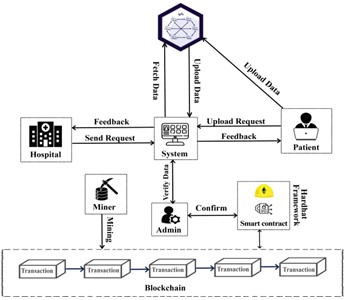
Image1. Flowchart of Patient Data Management in Blockchain Healthcare System
The Role of Blockchain in Facilitating Secure Data Exchange Among Healthcare Providers
It is extremely imperative for providers to securely share patient information in order to provide good and efficient care, especially, given today’s healthcare scenario.
Traditional systems often face issues like breaches and unauthorized access, so blockchain technology comes as a major solution to keep medical records confidential and intact.
Blockchain provides a clear and unchangeable record of patient data through the use of decentralized ledgers, encrypting each transaction for traceability.
This setup not only improves data security but also gives patients control over their own health information.
Additionally, using smart contracts in this system can help automate the sharing of data, reduce inefficiencies, and lower mistakes. In conclusion, as healthcare providers start using blockchain, they can gain better trust and teamwork, creating a network that focuses on patient care and data safety, signifying a major step forward in healthcare data management.
Blockchain’s effects extend beyond technology, demonstrating a change in the field’s perception and use of medical records.
Conclusion
Blockchain technology transforms patient data security and enhances operational efficiency in healthcare.
Blockchain allows for decentralized information storage, granting patients greater control over their medical records and ensuring data security, verifiability, and ease of access.
This major change can solve ongoing problems in healthcare data security, as blockchain’s unchangeable nature lowers the chances of unauthorized access and data breaches.
Moreover, the transparency that blockchain provides builds trust among all parties involved, like patients, providers, and researchers, promoting a team-based atmosphere for new ideas and better health results.
As the industry continues to deal with data management challenges, using blockchain can be an effective way to create a stronger and more connected healthcare system.
Essentially, blockchain is a comprehensive solution that transforms healthcare data management, fostering a more patient-focused care model.
By taking advantage of these developments, the healthcare field can protect patient data while also improving clinical practices.
This connected environment highlights the importance of ongoing communication and adjustment as technology changes, confirming blockchain’s important role in improving healthcare delivery.
Future Implications of Blockchain in Healthcare and Its Potential to Transform Patient Care
Given that the healthcare industry consumes more digital tools, blockchain technology is opening up exponentially to become a key player in driving change. This shift can greatly improve patient care by creating a system for managing medical records that is safer, clearer, and more effective.
Healthcare providers can ensure patient information remains unchangeable and accessible only to authorized individuals by utilizing blockchain for medical records, thereby mitigating concerns about data security.
Additionally, blockchain’s decentralized structure makes it easier for different healthcare systems to work together, allowing providers to get complete patient histories right away.
These improvements not only lower the chances of data leaks but also enhance coordination of care between patients and clinicians.
Looking ahead, as solutions for healthcare data security using blockchain develope, they could change how patients and providers interact, moving from a relationship filled with trust issues to one based on verified, secure sharing of data and teamwork, which would lead to better health results.
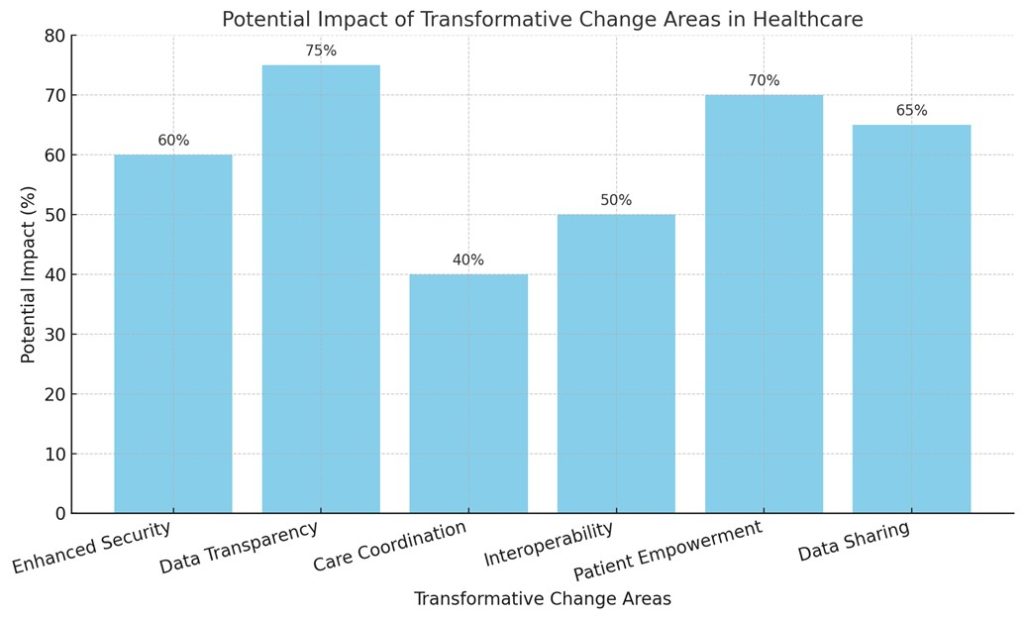
The chart illustrates the potential impact of various transformative change areas in healthcare.
Each bar represents a different area, such as Enhanced Security and Data Transparency, along with their corresponding estimated percentage improvements.
The data indicates significant potential benefits ranging from a 40% improvement in treatment speed to a 75% increase in patient trust, highlighting areas for strategic focus in healthcare advancements.

You may also like

AI vs Blockchain vs Crypto Careers: What to Choose in 2026?