AI Education and Job Market in 2026
- Posted by 3.0 University
- Categories Artificial Intelligence
- Date March 18, 2026
- Comments 0 comment
Artificial Intelligence is no longer the future, it’s the present. From content creation to software development, AI is reshaping how we learn, work, and earn.
But here’s the real question:
👉 Will AI replace jobs—or create better ones?
In 2026, the answer is clear:
AI won’t replace you—but someone using AI will.
This guide breaks down:
- How AI is transforming education
- Which jobs are at risk (and which are booming)
- The exact skills you need to stay ahead
The AI Revolution in Education and Employment
AI, as an unparalleled option, is, incredibly, rising as an epoch-making shift in various facets of life, including the fundamentals of education and employment.
AI is not just another technological advancement; it is a transformative force that is transforming the way we exchange ideas and acquire new skills.
In many classrooms, you now see AI crafting lessons that fit each student’s needs, sometimes even repeating ideas just to fill those familiar gaps.
I mean, look at countries like India—they’ve been throwing serious resources into AI-led education projects, clearly setting up their future workforce for a cutthroat job market.
The expected boom in the AI education arena, as depicted in the image, hints at an upswing in efforts to reinvent traditional teaching methods.
And, generally speaking, with rising demand for tech-savvy professionals, the link between learning and work is becoming more critical than ever, pushing for smart, creative investments both here and across the globe.
AI in Education: Preparing the Future Workforce
Artificial intelligence in schools isn’t just a neat upgrade—many see it as pretty much essential to prep our future workforce.
Big players like the United States, China, and South Korea are, in most cases, shelling out billions to shake up how we learn, even if the ways these funds get used aren’t always laid out in neat steps.
These hefty investments seem to be aimed at carving out spaces where students can pick up skills that match an ever-changing job market, and there’s an almost tangible drive behind all this spending.
India, for instance, has thrown ₹500 crore behind a Centre of Excellence in Artificial Intelligence for Education, a move that—generally speaking—tries to bridge old gaps and patch up areas where skills just aren’t keeping pace.
With AI-powered tools, learning becomes a bit more personal, adapting to what each student does best and where they might need a nudge instead of following one strict formula.
Altogether, this mix of world-spanning plans and local initiatives hints at a real shift in education—one that isn’t only about memorizing facts but also about gaining the nimble mindset needed for today’s often messy work landscape.
How AI Is Transforming the Job Market
AI is automating repetitive tasks across industries like:
- Customer support
- Data entry
- Basic content writing
- Accounting
Jobs at Risk
- Data entry operators
- Tele-callers
- Basic coders
- Administrative roles
Jobs Growing Fast
- AI Engineers
- Data Scientists
- AI Product Managers
- Automation Specialists
👉 According to industry reports, AI-related hiring is growing over 30% annually, especially in countries like India.
The Entry-Level Job Crisis (Biggest Shift in 2026)
One of the most overlooked trends:
👉 Freshers are facing more competition than ever.
Why?
- AI tools can now do entry-level work faster
- Companies are hiring fewer juniors
- Expectations for “job-ready skills” are rising
What This Means
- Degrees alone are no longer enough
- Practical skills > theoretical knowledge
- Portfolio matters more than marks
[Image: AI in Education]
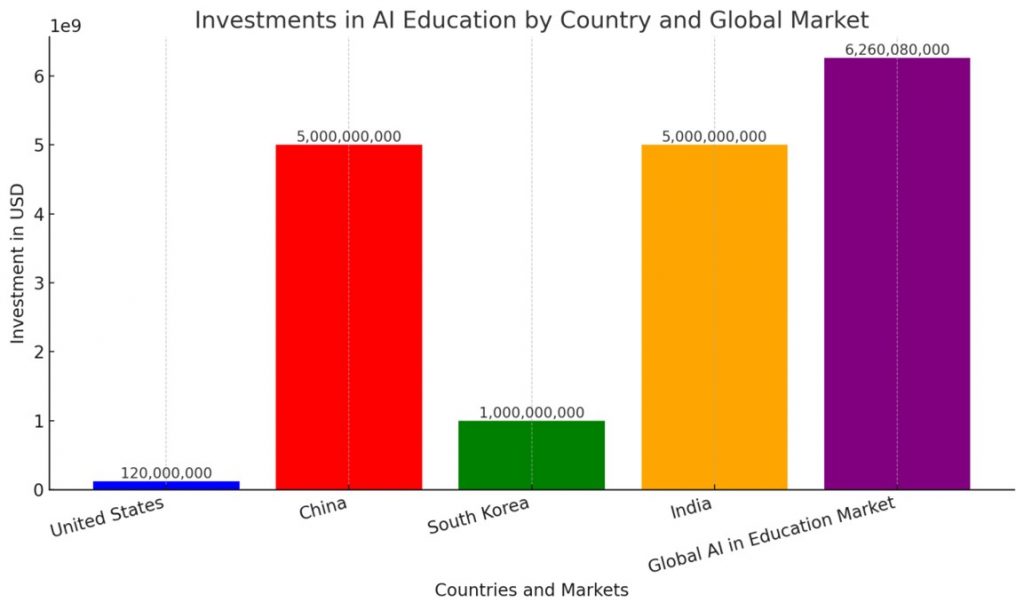
The chart displays investments in AI education across different countries and the global market. It illustrates the substantial financial commitments towards AI education made by various nations, with China and India leading, alongside the overall global investment, emphasizing the importance of these strategic investments for future workforce preparation.
AI and Education: A System That’s Struggling to Keep Up
Traditional education is lagging behind AI innovation.
Problems in Current Education
- Outdated curriculum
- Lack of real-world skills
- Minimal AI integration
What’s Changing
- Rise of online learning platforms
- Skill-based certifications
- AI-powered personalized learning
👉 The future of education is learning by doing—not memorizing.
The AI Job Market: Global and Indian Scenarios
AI demand is shaking up the job market these days. Globally, the pace of growth appears uncontrollable, with transformation occurring seemingly overnight. Take India, for example.
Its IT scene experienced a minor setback recently, but now there’s talk of a nearly 39% jump in AI and data science roles by 2025.
And it’s not just in big cities; Tier 2 towns are catching on too, with IT hiring up by 48%, suggesting tech chances are spreading in unexpected places.
This spread suggests that AI’s influence is permeating various regions and industries, creating new opportunities for those prepared to enter the field.
In most cases, a World Economic Forum study even mentions that roughly 69 million new jobs could emerge worldwide in the next five years, clearly underlining AI’s growing role in shaping our future work scene.
This surge pushes the need for skill upgrades and reinforces how education is key in preparing us for an increasingly automated world, as depicted in the table.
Region | Projected Job Growth (2025-2030) | Top Emerging Roles |
Global | 69 million new jobs | AI, machine learning, data specialists |
India | 22% | AI, machine learning, data specialists |
India | 600,000–650,000 to >1,250,000 | 25–35% CAGR |
India | 14-fold increase | 16% |
India | 1 million | |
India | $3 billion | 10 million Indians |
AI Job Market Statistics: Global and Indian Scenarios
Top AI Skills in Demand (2026)
If you want to survive and thrive, focus on these:
Technical Skills
- Machine Learning basics
- Data analysis
- Python programming
High-Income AI Skills
- Prompt Engineering
- AI Automation (No-code tools)
- AI content creation
Human Skills (Most Underrated)
- Critical thinking
- Creativity
- Problem-solving
👉 These are the skills AI cannot easily replace.
New Jobs AI Is Creating (Not Destroying)
AI is not just replacing jobs—it’s creating entirely new ones.
Emerging Roles:
- Prompt Engineer
- AI Trainer
- AI Content Strategist
- Human-AI Interaction Designer
These roles didn’t exist a few years ago—but now pay extremely well.
Top AI Job Roles in 2026
The world’s growing acceptance of AI’s giant potential is shifting how jobs work—new roles are popping up for 2025 that nobody expected.
For example, machine learning engineers now design algorithms that enable machines to learn independently, and their work often sparks a wave of innovation.
Data scientists, too, find themselves in the mix, digging into messy datasets to pull out insights that help guide key decisions across different fields.
AI research scientists keep pushing what’s possible by exploring uncharted territory in technology, while robotics engineers get busy building AI-powered machines for all kinds of industries.
Ethical issues about AI aren’t far behind, so AI ethics specialists have become even more important, making sure that these new tools are used in ways that are, generally speaking, responsible.
All of these roles, in one way or another, highlight how deeply AI is now woven into the job market.
The illustration of these trends is effectively captured in the image, which shows the expected boom of the AI field and hints at the growing need for these specialized positions.
Job Role | Description | Median Annual Salary |
AI Engineer | Builds AI models from scratch and helps product managers and stakeholders understand results. | $204,000 |
Machine Learning Engineer | Designs, builds, and manages machine learning software applications. | $157,969 |
Data Scientist | Collects, analyzes, and interprets large datasets to inform strategic decisions. | $163,000 |
Natural Language Processing Engineer | Develops algorithms that enable machines to understand and generate human language. | $119,000 |
AI Ethics Specialist | Ensures AI applications adhere to ethical guidelines, monitor for biases, and establish accountability mechanisms. | $137,000 |
Top AI Job Roles in 2025
How to Prepare for AI Jobs in 2026 (Step-by-Step)
Here’s a practical roadmap:
1. Learn AI Tools
- ChatGPT
- Midjourney
- Automation tools
2. Build Real Projects
- Create AI-based apps
- Automate small tasks
- Build a portfolio
3. Focus on Skills, Not Degrees
- Certifications > traditional learning
4. Stay Updated
- AI evolves weekly—keep learning
To get the latest updates on AI, Web3 and Blockchain visit at- 3versetv
Conclusion
AI is shaking up both classrooms and workplaces, showing just how important it is for anyone aiming for a career in this field to keep learning and planning.
With forecasts hinting that investments in AI education could hit around $5.9 billion by 2023 and beyond, global players—and even Indian stakeholders—are being nudged to step up and help cultivate fresh talent.
Schools, government programs, and private firms are all contributing, fostering a collaborative environment that equips individuals to navigate a rapidly evolving world.
Usually, people notice that combining ideas from various fields while carefully considering ethical issues reveals the true complexity of AI.
In the end, staying optimistic isn’t only about cashing in on economic opportunities, it’s also a shared duty to make sure AI moves forward in a fair, responsible way.
This hands-on, proactive vibe is what we need to tap into AI’s full potential, both in education and on the job.
Future Predictions: What Happens by 2030?
- 70% of job skills will change
- AI-human collaboration will dominate
- Traditional degrees will lose value
- Skill-based hiring will rise
👉 The future belongs to fast learners, not degree holders.
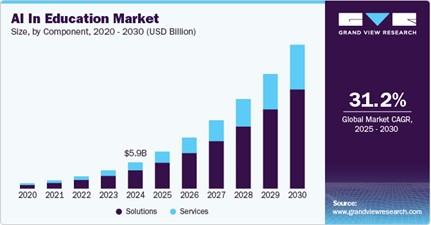
Image1. Projected Growth of AI in Education Market (2020-2030)

You may also like