Digital Transformation in Education
- Posted by 3.0 University
- Categories Emerging Technology
- Date February 12, 2025
- Comments 0 comment
The New Era of EdTech
Throughout time, how education is done has often matched the technology that society has.
The recent rise in online learning, especially because of global events like the COVID-19 pandemic, has brought big changes in how education is given.
Flexible online setups that prioritize accessibility and personalization are increasingly replacing traditional classrooms.
New educational technology (EdTech) tools have changed not just the learning process but also what teachers and students do.
As schools are using digital platforms more than ever, they create a chance to explore new trends and job opportunities in this new field.
Using technologies like artificial intelligence and data-driven personalization hints at a future where education is customized for each person, which could lead to better engagement and results.
This change starts a new time in EdTech and sets the stage for a career shift that meets the changing needs of today’s job market.
Digital Transformation in Education
In the past few years, education has changed a lot, mostly because of the rapid use of digital technologies.
The COVID-19 pandemic was a major reason that pushed schools to quickly use online platforms for teaching and changing how classrooms work.
This change happened because of important things like better internet access and more affordable digital devices, which helped teachers and students to be more prepared and flexible.
Because of this, teaching methods have adapted to include new ways that focus on getting students involved and allowing them to take charge of their learning.
Key changes include more interactive tools that help people work together and get feedback in real time.
As noted, the easy use of EDLA-certified interactive displays allows teachers to concentrate on teaching without being concerned about whether the technology will function properly.
This change highlights how digital transformation is crucial for creating effective learning spaces and getting students ready for a quickly changing job market.
Year | Percentage of Schools with High-Speed Internet | Increase in Online Course Enrollment | Investment in EdTech | Percentage of Teachers Using Digital Tools |
2022 | 85% | 20% | $18 billion | 75% |
2023 | 90% | 25% | $24 billion | 80% |
2024 | 95% | 30% | $30 billion | 85% |
Digital Transformation in Education Statistics
Personalized and Adaptive Learning
The way technology has changed education is very significant.
It has started a change from traditional methods that fit everyone to more personalized learning strategies.
All kudos to the advancements in artificial intelligence and machine learning; apparently, educational platforms, now, have attained the ability to create unique learning experiences that meet the specific needs of each student, which helps keep them engaged and improves their ability to remember information.
Undoubtedly, all of these systems, for the most part, use real-time data to adjust the content they offer, ensuring that learners face challenges that are appropriately challenging, neither too easy nor too hard.
This ability to adapt not only boosts student motivation but also results in better learning results, making it important in today’s job market that requires ongoing skill development.
Current studies, like those focusing on the training needs of cybersecurity workers, show that personalized learning environments are vital for preparing people for specialized jobs.
Therefore, adopting these new technologies in education is crucial to successfully managing today’s complex workforce challenges.
Year | Percentage of Educators Using Adaptive Learning Tools | Increase in Student Engagement | Improvement in Student Grades |
2021 | 65 | 30 | 20 |
2022 | 75 | 35 | 25 |
2023 | 85 | 40 | 30 |
Personalized and Adaptive Learning Statistics
Microlearning and Mobile-First Approaches
In a time where technology is growing fast, the need for effective learning methods is very important.
Microlearning, which is made up of small parts of education, meets the current learners’ need for quick and easy content that fits into their busy lives.
When combined with a mobile-first approach, this method allows learners to study anytime and anywhere, helping them to keep developing their skills.
The rise of smartphones and other mobile gadgets has sped up this change, leading to many apps made just for microlearning.
Well-known platforms like Duolingo for learning languages and Blinkist for book summaries show how microlearning can be used to improve learner interest and memory retention.
By adopting these new methods, schools and businesses not only improve learning results but also help individuals succeed in a job market that values ongoing learning and flexibility.
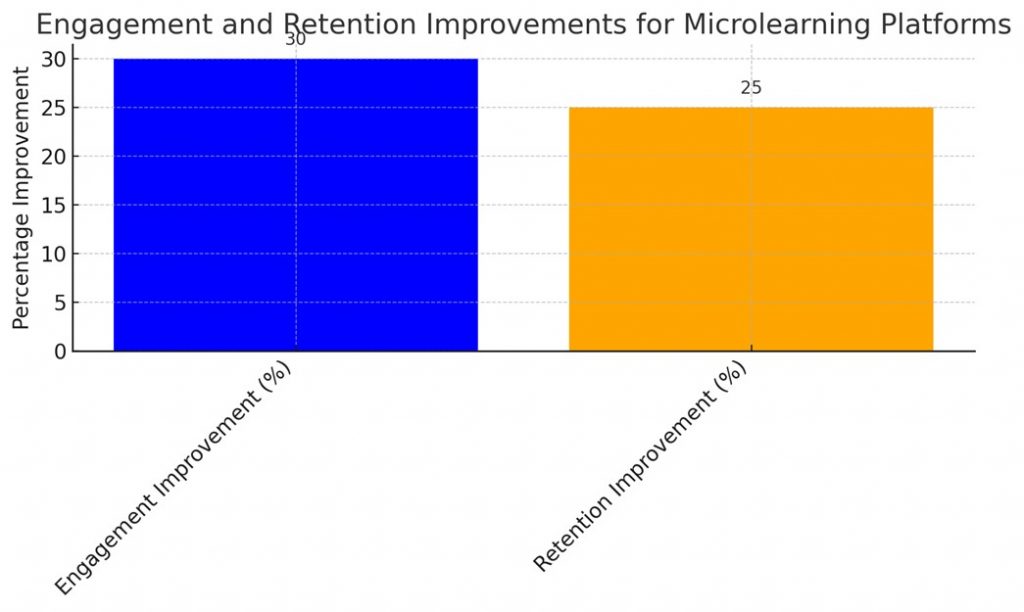
The bar chart illustrates the percentage improvements in learner engagement and retention for notable microlearning platforms.
The chart indicates an engagement improvement of 30% and a retention improvement of 25%, supporting the effectiveness of microlearning and mobile-first methods in enhancing educational outcomes.
Conclusion
As the EdTech area keeps changing, it is clear that using technology in education is not just a passing trend but a major change that will affect future jobs.
The combination of personalized learning, digital access, and new technologies is forming a lively system that requires adjustment from both teachers and students.
This change brings unique chances for teamwork among different groups, such as tech developers, instructional designers, and teachers, in creating new learning experiences.
Using gamification and mixed learning methods boosts student involvement and access, making education more relevant to the various needs of today’s learners.
Additionally, these developments create opportunities for new job roles that require a combination of technical skills and teaching knowledge.
By accepting this change, people can find new paths for career growth in a more digital world.
This forward-thinking way of education supports a better future, promoting lifelong learning and ongoing improvement, as shown in the image.
Transform your career with 3.0 University industry-leading online courses.
Master AI-Powered Ethical Hacking, explore cutting-edge cybersecurity, and gain expertise in Blockchain and AI, all while earning global certifications.

You may also like
What is more Important Degree or skill in 2026?

Highest Paying Jobs in India 2026