

Ransomware-as-a-Service (RaaS): How It Works on the Dark Web
- Posted by 3.0 University
- Categories Emerging Technology
- Date August 4, 2025
- Comments 0 comment
What is Ransomware-as-a-Service?
The understanding of modern cybercrime mechanics becomes essential because cyber threats continue to grow in our digital innovative era. Ransomware-as-a-Service (RaaS) has emerged as a disruptive force which substantially transformed the cybersecurity industry.
How RaaS works on the Dark Web?
The ransomware model provides simple access to dark web platforms which enables more users to participate in ransomware attacks.
RaaS enables hackers who lack advanced technical abilities to execute sophisticated ransomware attacks for financial gain which differs from traditional ransomware that requires advanced technical expertise.
The widespread adoption of RaaS has resulted in severe consequences for businesses because it leads to substantial financial losses and compromised data integrity and damaged corporate reputations.
Organizations need to understand RaaS exploitation methods because they face challenges in their cybersecurity efforts. [cited] The Ransomware-as-a-Service ecosystem graphic effectively demonstrates the complex network of roles and processes which define this modern cybercrime business model.
Overview of Ransomware-as-a-Service (RaaS): Its Emergence in the Cybercrime Landscape
Ransomware Marketplace on Darknet
The development of cybercrime shows a significant pattern because Ransomware-as-a-Service (RaaS) has emerged as a dominant force.
The democratization of ransomware tools through most cases enables individuals with basic technical abilities to join cybercriminal activities.
The RaaS model functions like traditional business subscriptions because affiliates obtain various ransomware tools through a profit-sharing arrangement.
These dark web platforms provide solutions alongside customer support and tutorial resources and collaborative discussion forums to their users.
The availability of ransomware tools has transformed the security environment by producing both numerous and destructive cyberattacks.
The RaaS model enables easier ransomware attacks because it removes the requirement for skilled hackers to create custom malicious software thus enabling more actors to exploit organizational vulnerabilities.
Businesses must establish robust security measures because ransomware criminal organizations have expanded their operations and developed advanced capabilities. The operational stability of these organizations faces severe damage while their financial security becomes at risk.
The ransomware marketplace operating on the darknet demonstrates how cybercrime has evolved into a complete business operation.

The charts display different ransomware trend elements: 1. The bar chart demonstrates how LockBit 3.0 led all ransomware groups in 2022 with 44% of total incidents. 2. The line chart shows no change in projected ransomware attack costs from 2023 to 2024 which remain at $20 billion before expected substantial growth in following years. 3. The pie chart displays the percentage distribution of malware families sold as a service throughout 2015 to 2022. Ransomware makes up 58% of the entire total. 4. The charts about average ransom payments and ransomware attempts were supposed to show data but remained blank which indicates major increases in ransom payments and ransomware attempts during 2023.
Understanding Ransomware-as-a-Service
How Ransomware-as-a-service is Changing Cybercrime?
The emergence of Ransomware-as-a-Service (RaaS) has transformed cybercrime through its business model which provides easy access to cybercriminal activities.
RaaS provides sophisticated malware to non-technical individuals who want to engage in cybercrime thus increasing the number of potential attackers.
Ransomware-as-a-Service (RaaS) operates as a cybercrime system where ransomware operators develop software which affiliates purchase to execute attacks through their software. The setup of this system establishes a powerful underground economy because dark web marketplaces facilitate the trade of various ransomware tools and services.
How Cybercriminals Use Ransomware-as-a-Service?
The changing security landscape enables cybercriminals to establish affiliate marketer roles within RaaS operations which results in more sophisticated and profitable attacks on businesses. The RaaS ecosystem depicted in [extractedKnowledge1] demonstrates its intricate nature which proves the serious threat it poses to organizational cybersecurity.
Definition & Explanation of How RaaS Operates on the Dark Web
The Ransomware-as-a-Service model known as RaaS has transformed the way cybercrime operates. The ransomware model which used to be exclusive to advanced cybercriminals has evolved into a business that new cybercriminals can access.
The dark web contains this specific ecosystem. The dark web provides aspiring cybercriminals with the opportunity to buy ransomware together with support solutions.
These packages include user manuals as well as customer service and marketing services to assist attacks.
RaaS platforms provide simple access to cybercrimes which enables non-technical individuals to join malicious activities thus making them accessible to everyone.
RaaS platforms lower the technical requirements needed to execute ransomware attacks so that new offenders can easily join the malicious activities. The model enables cybercriminals to concentrate on execution and profit generation instead of developing complex ransomware.
The visual representation in [cited] illustrates the dark web RaaS operational workflows that connect to each other.
The Business Model of RaaS
The introduction of Ransomware-as-a-Service (RaaS) has transformed cybercrime by providing simple entry points for new criminals. The system operates similarly to software-as-a-service by providing pre-built extortion tools to non-technical criminals who want to commit cybercrime.
The platforms enable affiliates to perform ransomware attacks through their platforms.
The system operates through profit-sharing arrangements between affiliates and operators which leads to increased criminal activity. Ransomware-as-a-Service (RaaS) demonstrates its collaborative nature through the operator-affiliate partnership structure.
RaaS demonstrates a business structure which mirrors traditional corporate operations.
The RaaS setup described in [cited] demonstrates its various roles in illegal markets while showing how cybercriminals use phishing and vulnerability exploitation to maximize their impact.
The worrisome cybercrime model presents an escalating challenge for businesses to defend their digital assets and data.
Statistic | Value |
Global Revenue from Ransomware Attacks in 2020 | $20 billion |
Average Ransomware Payment in 2021 | $541,010 |
Increase in Ransomware Payments from 2020 to 2021 | 78% |
Average Ransomware Payment in 2019 | $312,000 |
Average Ransomware Payment in 2020 | $570,000 |
Percentage Increase in Ransomware Payments from 2020 to 2021 | 500% |
Conti Ransomware Group Revenue in 2021 | $180 million |
Number of Employees in Conti Ransomware Group | Up to 100 |
Percentage of Ransomware Attacks Attributable to RaaS in 2020 | 60% |
Number of New RaaS Providers in 2020 | 15 |
Ransomware-as-a-Service (RaaS) Business Model Statistics
Comparison of the Difference between RaaS and Traditional Ransomware
Highlighting the Commercialization of Cybercrime
Traditional ransomware has evolved into Ransomware-as-a-Service (RaaS) which represents a distinct category of cybercrime. The digital extortion environment has undergone a significant transformation because of this distinction.
The development and deployment of traditional ransomware requires a single actor who possesses advanced technical expertise. The dark web hosts a commercial platform which enables non-technical users to launch ransomware attacks through its RaaS platform.
How to protect against ransomware-as-a-service?
The commodification of cybercrime becomes evident through [cited] which demonstrates the RaaS ecosystem structure that enables affiliates to generate profits from existing ransomware tools. The transformation leads to more frequent and larger-scale attacks which make it difficult for businesses to establish sufficient protection measures.
The consequences of these events tend to be major in most situations. The expanding number of people who obtain advanced criminal tools creates a rising threat to organizational cybersecurity which demands strong preventive measures to fight this expanding illicit market and its consequences.
Conclusion
The development of cybercrime demonstrates a significant transformation toward business-like operations in digital space through Ransomware-as-a-Service (RaaS).
The process of commodification enables non-technical individuals to execute cyberattacks which creates equal access to sophisticated malware.
The effects on businesses are considerable; organizations, irrespective of size, are increasingly open to attacks which, as the illustrative image depicts, can be performed with relative simplicity and anonymity.
RaaS represents an expanding criminal sector that features cybercriminals operating within structured organizations which makes threat responses more complex.
The distinction between novice hackers and professional crime groups becomes less distinct because RaaS develops into a major ransomware marketplace on the darknet which transforms cybersecurity practices.
The solution to RaaS requires organizations to enhance their technological defenses while understanding its evolving nature which requires changes to established security and resilience frameworks for enterprises.

Image1. Ransomware-as-a-Service: Implications for Cybercrime and Enterprise Security
The Impact of Ransomware-as-a-service on Businesses
The evolving nature of cybercrime, along with strategies for protection against RaaS threats
Ransomware-as-a-Service, or RaaS, has really changed how cybercriminals work today, presenting a pretty big problem for businesses as cybercrime gets more complex, generally speaking.
Dark web marketplaces make it easy to get your hands on advanced ransomware, which means even folks who aren’t that tech-savvy can launch attacks, kind of leveling the playing field for cyber threats, in most cases.
Instead of traditional ransomware where you needed to be a real expert, this subscription thing means lots of different bad actors can jump in. This has major consequences for businesses; they’re not just looking at ransom payments anymore.
Think data recovery expenses, system downtimes, and hits to their reputation – all adding up. So, companies are boosting their cybersecurity game, doing regular backups, teaching employees, and setting up incident plans, and so on, all to try and dodge RaaS-related risks.
It all boils down to knowing that staying sharp and ready can seriously cut down on the weaknesses that come with RaaS, as seen in the broader story of the RaaS setup [cited], and in the image.
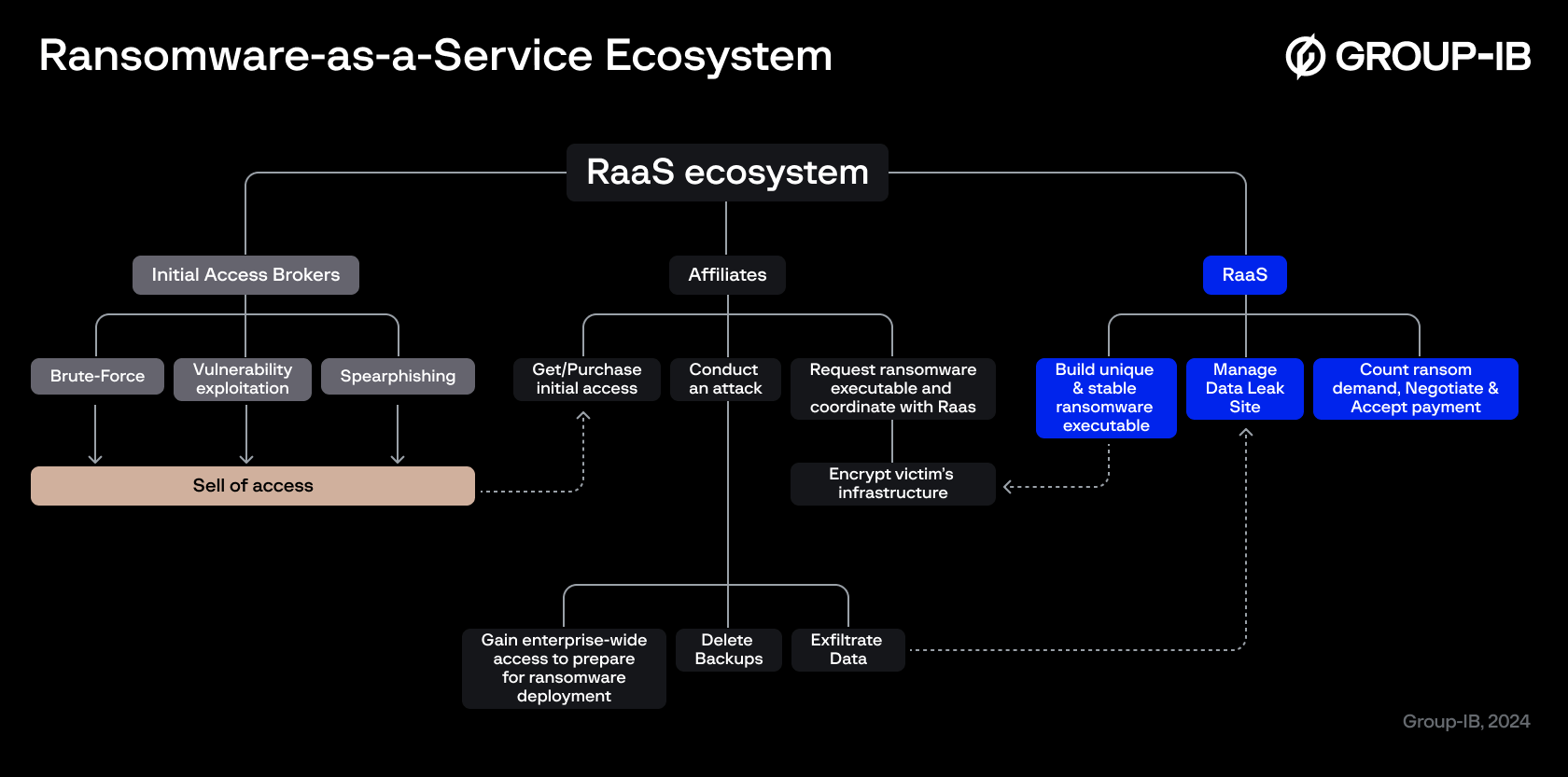
Image2. Overview of the Ransomware-as-a-Service Ecosystem, outlining attack methodologies and processes.

You may also like

What is more Important Degree or skill in 2026?

Highest Paying Jobs in India 2026