Design & Creative Courses in India: Options & Career Scope
A fashion designing course is a structured academic programme that teaches students to conceptualise, sketch, and construct clothing and accessories. It covers textile science, pattern making, garment construction, CAD tools like Adobe Illustrator and CLO 3D, and trend forecasting. In India, programmes typically run 3-4 years and are offered by institutes like NIFT and NID.
Fashion is just one branch of a much wider creative tree. India’s design sector spans interior design, animation, VFX, multimedia, product design, visual communication, cosmetology, and fine arts, each with its own tools, portfolio requirements, and career outcomes. Picking the right one starts with knowing what each fashion designing course or design programme actually involves.
- Key takeaway 1: Fashion designing course options in India range from 3-year diploma programmes to 4-year undergraduate degrees, and salary potential varies widely by specialisation.
- Key takeaway 2: Every creative discipline requires a portfolio, but what goes into that portfolio differs significantly across fashion, animation, interior design, and product design.
- Key takeaway 3: India’s animation and VFX industry was valued at approximately USD 1.1 billion in 2022 and is projected to reach USD 2.5 billion by 2027, according to the FICCI-EY Media and Entertainment Report 2023.
- Key takeaway 4: The Indian fashion industry contributes around 2.3% of GDP and employs over 45 million people, per the Ministry of Textiles Annual Report 2023.
- Key takeaway 5: Choosing between these courses comes down to three questions: what you enjoy making, which tools you are willing to master, and what career outcome you are targeting.
Last updated: July 2026. Reviewed by the 3University editorial team.
What Is a Fashion Designing Course and How Does It Compare to Other Design Paths
A fashion designing course covers pattern making, textile science, garment construction, fashion illustration, and trend forecasting. Top institutes like NIFT (National Institute of Fashion Technology), NID (National Institute of Design), and Pearl Academy offer 4-year B.Des programmes that combine studio work with industry internships. Understanding the fashion designing course duration and eligibility criteria is essential before applying.
The fashion designing course is not just about drawing clothes. Students work with CAD software like Adobe Illustrator and CLO 3D, learn fabric sourcing, understand the retail supply chain, and build a collection portfolio by the final year. Entry typically requires clearing the NIFT entrance exam or NID DAT. Students researching a fashion designing course after 12th will find these national exams are the primary gateway.
Compare that to a BFA course (Bachelor of Fine Arts). A BFA is broader and more conceptual. It covers painting, sculpture, printmaking, applied arts, and art history. Institutions like Sir J.J. School of Art in Mumbai and Faculty of Fine Arts at MS University Baroda are among the most respected. A BFA suits students who want to teach, work in galleries, become illustrators, or move into commercial art and branding later.
Interior Design Course: What It Actually Teaches
An interior design course trains you to plan and style built environments, both residential and commercial. You will learn AutoCAD, SketchUp, 3ds Max, and Revit alongside material science, lighting design, space planning, and building codes. The School of Interior Design at CEPT University in Ahmedabad and Rachana Sansad in Mumbai are nationally recognised programmes.
Interior designers in India earn between Rs 3.5 LPA at entry level and Rs 15+ LPA with 5-8 years of experience, according to AmbitionBox (2024). Freelance and studio work is common, and the real estate boom across Tier 1 and Tier 2 cities is creating consistent demand.
Product Design Course: Where Engineering Meets Creativity
A product design course sits at the intersection of industrial design, user experience, and engineering. You will study ergonomics, materials, manufacturing processes, and user research. Tools include SolidWorks, Fusion 360, Rhinoceros 3D, and rapid prototyping with 3D printing.
NID Ahmedabad’s Industrial Design programme is globally ranked and produces graduates who work at companies like Godrej, Tata Motors, and international firms. Product designers increasingly work alongside UX/UI teams as physical and digital products converge, which makes this one of the more future-proof creative paths available right now.
Animation, Multimedia, VFX, and Visual Communication: The Digital Creative Cluster
These four disciplines are often grouped together because they share overlapping tools and workflows, but they lead to distinct careers. Understanding the difference before you enrol saves you from joining the wrong programme.
What Is an Animation Course
An animation course teaches 2D and 3D animation, character rigging, motion graphics, and storytelling for film, gaming, and digital media. Core software includes Maya, Blender, Adobe Animate, and After Effects. MAAC (Maya Academy of Advanced Cinematics), Arena Animation, and Whistling Woods International are popular choices across India.
India’s animation and VFX industry was valued at approximately USD 1.1 billion in 2022 and is projected to reach USD 2.5 billion by 2027, according to the FICCI-EY Media and Entertainment Report 2023. Separately, the NASSCOM Animation and VFX Industry Report 2023 notes that India has over 300 animation studios employing more than 85,000 professionals. Studios like DQ Entertainment, Tata Elxsi, and Prime Focus Technologies actively recruit from domestic programmes.
What Is a Multimedia Course
A multimedia course is broader than animation. It covers graphic design, video editing, web design, photography, audio production, and interactive media. Think of it as training you to work across multiple content formats rather than specialising deeply in one. Symbiosis Institute of Design and Zee Institute of Creative Art (ZICA) offer well-structured multimedia programmes.
Multimedia professionals find work in advertising agencies, digital marketing firms, media houses, and as freelancers. The role of a multimedia designer is evolving fast with short-form video and social content creation now core business functions.
What Is a Viscom Course
A viscom course (Visual Communication) trains you in the art of conveying ideas through visual elements, including typography, branding, layout design, photography, and advertising. It is one of the most employable creative degrees in India, with graduates working in advertising, publishing, branding agencies, and UX design.
Stella Maris College and Loyola College in Chennai are particularly known for their Viscom programmes. The curriculum typically includes brand identity projects, editorial design, campaign work, and a final thesis project. Strong drawing skills help, but conceptual thinking is what separates average viscom graduates from exceptional ones.
Cosmetology Course: A Practical, Entrepreneurship-Friendly Path
A cosmetology course covers hair care, skincare, makeup artistry, nail technology, and salon management. It is intensely hands-on. VLCC Institute, Lakme Academy, and CIDESCO-affiliated schools offer programmes ranging from 6-month diplomas to 2-year advanced certifications.
India’s beauty and wellness industry was estimated at Rs 90,000 crore in 2023 and is growing at roughly 15-18% annually, according to the Associated Chambers of Commerce and Industry of India (ASSOCHAM). Cosmetology is one of the few creative fields where self-employment and salon ownership are realistic outcomes within 2-3 years of completing your course.
Comparing Design Courses: Tools, Duration, and Career Outcomes
| Course | Typical Duration | Key Tools | Entry-Level Salary (India) | Top Recruiters / Outcomes |
|---|---|---|---|---|
| Fashion Designing Course | 4 years (B.Des) | Adobe Illustrator, CLO 3D, Photoshop | Rs 3-6 LPA | NIFT graduates, retail brands, export houses |
| BFA | 4 years | Traditional media, Procreate, Illustrator | Rs 2.5-5 LPA | Galleries, ad agencies, illustration, teaching |
| Interior Design | 3-4 years | AutoCAD, SketchUp, 3ds Max, Revit | Rs 3.5-7 LPA | Architecture firms, real estate developers |
| Product Design | 4 years (B.Des) | SolidWorks, Fusion 360, Rhino 3D | Rs 4-8 LPA | NID alumni, manufacturing, consumer goods |
| Animation / VFX | 1-3 years | Maya, Blender, Nuke, After Effects | Rs 3-7 LPA | Film studios, gaming, OTT platforms |
| Multimedia | 1-2 years (diploma) | Premiere Pro, Photoshop, Animate | Rs 2.5-5 LPA | Digital agencies, media companies, freelance |
| Visual Communication | 3 years (BA) | InDesign, Illustrator, Figma | Rs 3-6 LPA | Branding agencies, publishing, UX teams |
| Cosmetology | 6 months – 2 years | Practical salon tools, product chemistry | Rs 1.8-4 LPA | Salons, film/TV, self-employment |
Salary figures are indicative ranges from AmbitionBox and Glassdoor India data (2024). Actual packages depend on institution reputation, city, and individual portfolio quality.
How to Build the Right Portfolio for Each Course
Fashion designing course portfolios need original garment sketches, fabric swatches, mood boards, and a complete capsule collection. Interior design portfolios require AutoCAD floor plans, 3D renders, and at least one executed project. Animation reels should show character movement, lip sync, and environment work, not just still frames.
Product design portfolios must show your design process, including research, ideation sketches, prototypes, and the final model. Viscom portfolios are judged on conceptual strength and typographic sensitivity, not just technical execution. The quality of your portfolio matters far more than your entrance exam score at most top design schools.
Which Design Course Should You Choose
If you enjoy clothing, textiles, and retail culture, a fashion designing course is the natural fit. If you prefer built spaces and architecture, interior design is the better path. Students drawn to storytelling and digital media should look at animation or viscom. Those who want to combine creativity with engineering logic will find product design the most satisfying. Cosmetology suits students who want a fast, practical route to self-employment.
Is a Design Career a High-Paying Profession in India
Creative careers have a wide salary distribution. Entry-level roles are modest, but senior designers, creative directors, and design entrepreneurs earn significantly more. UX designers with 5+ years of experience regularly command Rs 15-25 LPA at product companies. Fashion directors at major brands and senior VFX supervisors at OTT-linked studios earn comparable figures.
If you want a fuller picture of earning potential across professions in India, the highest paid professions in India guide at 3University.io breaks down salary benchmarks by sector with current data.
The design disciplines that consistently deliver stronger salary growth are product design, UX/UI, and animation for gaming and OTT, partly because they intersect with technology. That intersection is exactly what programmes at the School of Design Thinking at 3University.io are built around, combining creative thinking with digital tools and technology strategy.
Frequently Asked Questions
What is a fashion designing course and what do you study in it?
A fashion designing course teaches garment construction, textile science, fashion illustration, trend forecasting, and retail merchandising. Students work with tools like Adobe Illustrator and CLO 3D and build a collection portfolio. In India, NIFT and NID offer the most recognised 4-year B.Des programmes. Entry requires clearing a national entrance exam. The fashion designing course duration is typically 4 years for a full degree.
What is the eligibility for a fashion designing course after 12th in India?
Most fashion designing course programmes in India require completion of Class 12 from any stream. NIFT and NID conduct their own national entrance exams. Some private institutes accept students based on portfolio reviews and aptitude tests. Science or commerce backgrounds are not a barrier; creative aptitude and a strong portfolio matter most.
What is a BFA course and is it worth doing in India?
A BFA (Bachelor of Fine Arts) is a 4-year undergraduate programme covering painting, sculpture, printmaking, and applied arts. It is worth doing if you want to work in illustration, gallery art, art direction, or teaching. Sir J.J. School of Art Mumbai and MS University Baroda are top institutions. Commercial applications include advertising and brand identity work.
What is an interior design course and what software does it cover?
An interior design course trains you to plan and style residential and commercial spaces. Core software includes AutoCAD, SketchUp, 3ds Max, and Revit. The programme covers space planning, lighting, materials, and building regulations. CEPT University and Rachana Sansad are well-regarded options. Graduates work with architecture firms, real estate developers, and as independent consultants.
What is a viscom course and what careers does it lead to?
A viscom (Visual Communication) course covers typography, branding, advertising design, photography, and layout. Graduates work in advertising agencies, publishing houses, branding studios, and UX teams. Loyola College and Stella Maris College in Chennai have strong programmes. It is one of the most versatile creative degrees because it applies to both print and digital media.
What is a product design course and how is it different from industrial design?
A product design course focuses on creating physical objects by combining aesthetics, ergonomics, and manufacturing processes. Industrial design is a near-synonym, though product design now increasingly includes digital interfaces. Tools taught include SolidWorks, Fusion 360, and Rhino 3D. NID Ahmedabad’s programme is globally respected, and graduates work at consumer goods, automotive, and tech companies.
What is a cosmetology course and what career options does it open?
A cosmetology course covers hair, skin, makeup, nail technology, and salon management through hands-on practical training. Programmes range from 6-month diplomas to 2-year advanced certifications at institutes like VLCC and Lakme Academy. Career options include working in salons, film and TV production, bridal makeup, and owning your own salon business within a few years of graduating.
If you are drawn to design disciplines that intersect with technology, AI tools, and digital product thinking, explore the full range of programmes at 3University.io courses to find a path that combines creative skill with future-ready technical knowledge.

You may also like
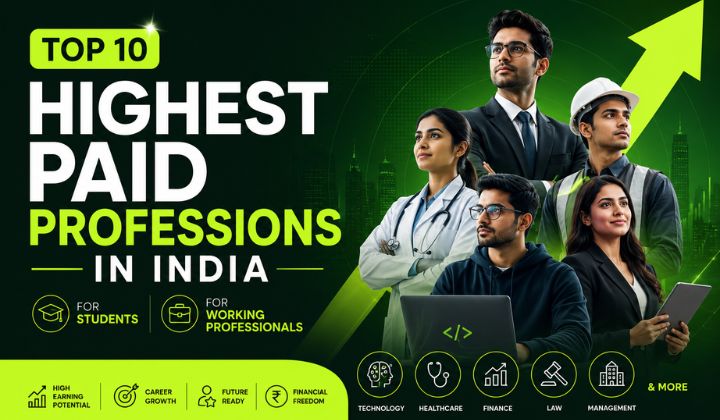
Highest Paid Profession in India